Buying or accepting secondhand clothing can extend a garment’s useful life, reduce demand for new materials, and make a wardrobe more affordable. Yet a pre-owned item may arrive with dust, fragrance, stains, damaged fasteners, or no readable care label. The practical question is not whether every thrifted garment is dangerous. It is how to inspect, clean, and use it without damaging the item or creating unnecessary exposure to harsh products.
This guide offers a calm, evidence-based routine for washable clothes, delicate pieces, shoes, hats, and accessories. It explains what ordinary laundering can accomplish, when extra precautions make sense, and when an item should be isolated, professionally cleaned, repaired, or declined. General cleaning is usually enough for intact clothing from a routine secondhand source; visible pests, body fluids, heavy mold, or a known contagious skin condition call for a different decision.
Why secondhand clothing deserves a simple hygiene plan
Clothing is not sterile, whether it is new or used. Manufacturing, transport, retail handling, storage, and wear all expose fabric to dust, skin oils, fragrances, and microorganisms. Laundering reduces soil and microbial load through a combination of detergent, water, agitation, rinsing, and drying. A scientific review in Applied and Environmental Microbiology describes those interacting physical and chemical processes, while also noting that household practices and textile types vary.
The environmental case for keeping textiles in use is also substantial. The U.S. Environmental Protection Agency estimated that 17 million tons of textiles entered the U.S. municipal solid-waste stream in 2018, while 11.3 million tons were landfilled. Reuse is not a substitute for buying less, repairing, or recycling, but it can delay disposal and extract more use from resources already spent.
A sensible routine protects both goals: make the garment clean enough for its next use while avoiding treatments so aggressive that they shorten its life.
Start with a dry inspection before washing
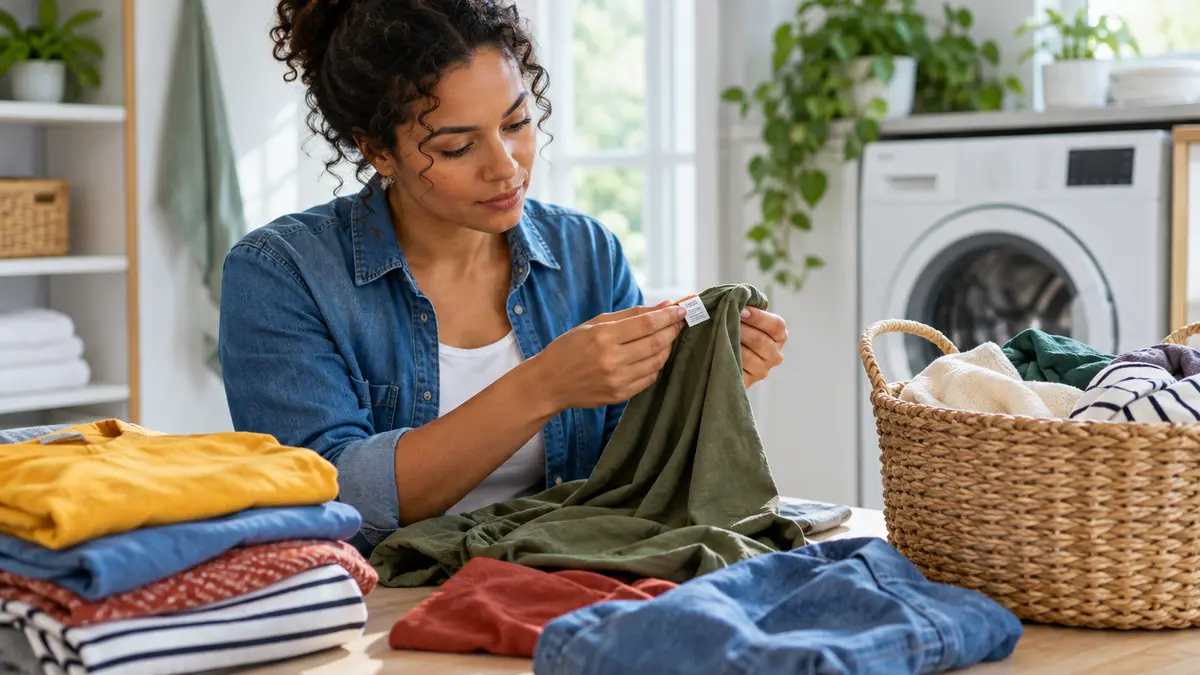
Do not drop a thrifted item directly into the household hamper. Inspect it over a hard, well-lit surface where loose material can be seen and cleaned up. Check seams, cuffs, waistbands, pockets, hems, linings, and folds. Look for stains, residue, dampness, unusual odor, missing fasteners, sharp objects, and signs of fabric damage.
Also read the fiber and care labels. In the United States, the Federal Trade Commission’s Care Labeling Rule requires washing or dry-cleaning instructions for covered garments. The label may warn against heat, bleach, machine agitation, or ironing. A readable label is the best starting point because a hygiene step that ruins a garment is not a sustainable one.
| What you notice | Likely next step | Reason |
|---|---|---|
| Intact, dry garment with ordinary storage odor | Wash according to the care label before wearing | Routine cleaning removes soil and residues without unnecessary escalation |
| Loose button, open seam, or weak zipper | Repair before washing when agitation could worsen damage | Early repair preserves the garment and prevents lost parts |
| Strong fragrance but no visible contamination | Use a normal fragrance-free wash and an extra rinse if the label permits | More product is not always better, especially for sensitive skin |
| Visible insects, eggs, cast skins, or suspicious spotting | Seal the item away from bedrooms and soft furnishings; seek qualified pest guidance | Home washing choices depend on the pest and the textile |
| Wet mold, extensive mildew, body fluids, or unknown hazardous residue | Decline the item or obtain professional advice | Exposure and salvageability cannot be judged from a generic routine |
Empty pockets and protect your hands
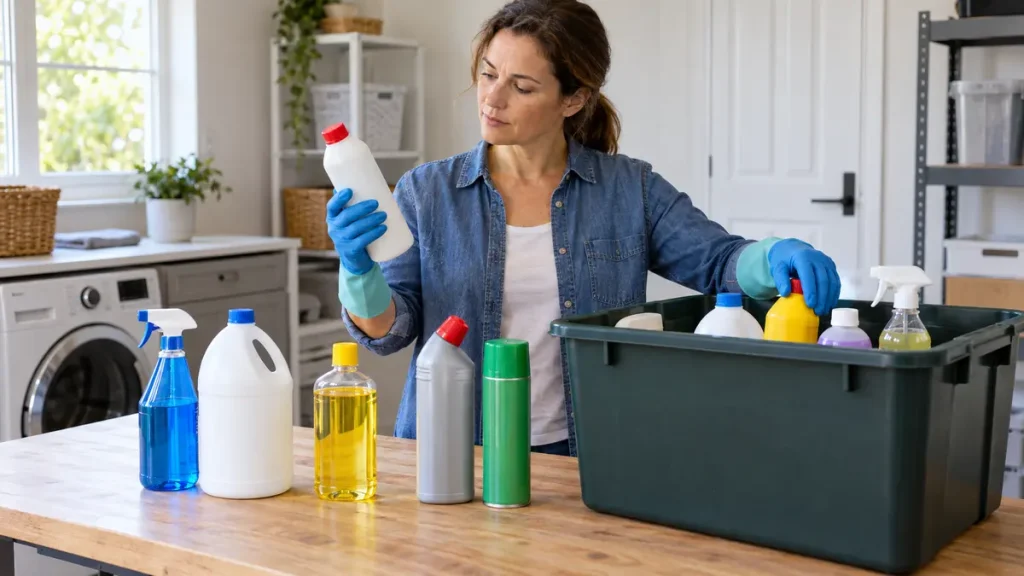
Remove pins, broken glass, medication, batteries, tissues, and other forgotten objects before laundering. If the garment is visibly soiled or the source is uncertain, disposable gloves can reduce direct contact during inspection. Wash hands afterward. Avoid shaking a dusty or soiled item, because vigorous handling can disperse particles.
Separate until the first clean
Keep unwashed secondhand pieces in a washable bag or bin, separate from clean laundry. This is a temporary workflow, not a reason to keep items sealed indefinitely. Sort by color, fabric weight, and care instructions. New-to-you dark dyes may bleed, and delicate trims can snag on zippers or hooks.
Choose the least aggressive effective cleaning method
For most ordinary garments, follow the label, measure a standard detergent dose, select the recommended cycle, and dry completely. The Centers for Disease Control and Prevention distinguishes cleaning from disinfection and notes that cleaning with soap and water removes dirt and many germs in common household situations. Routine disinfection is generally not necessary unless someone is sick or at higher risk.
That principle matters in laundry. Adding bleach, disinfectant, essential oils, or multiple boosters to every load can damage fibers, irritate skin, create unsafe chemical combinations, or add unnecessary cost. Never mix bleach with ammonia, vinegar, or other cleaners. If a product is used, follow both the garment label and the product label.
- Read the entire care label, including warnings about bleach, heat, and drying.
- Close zippers, fasten hooks, turn embellished pieces inside out, and place small items in a mesh bag.
- Wash with a suitable detergent on the warmest setting the label safely allows; do not assume hotter is always compatible.
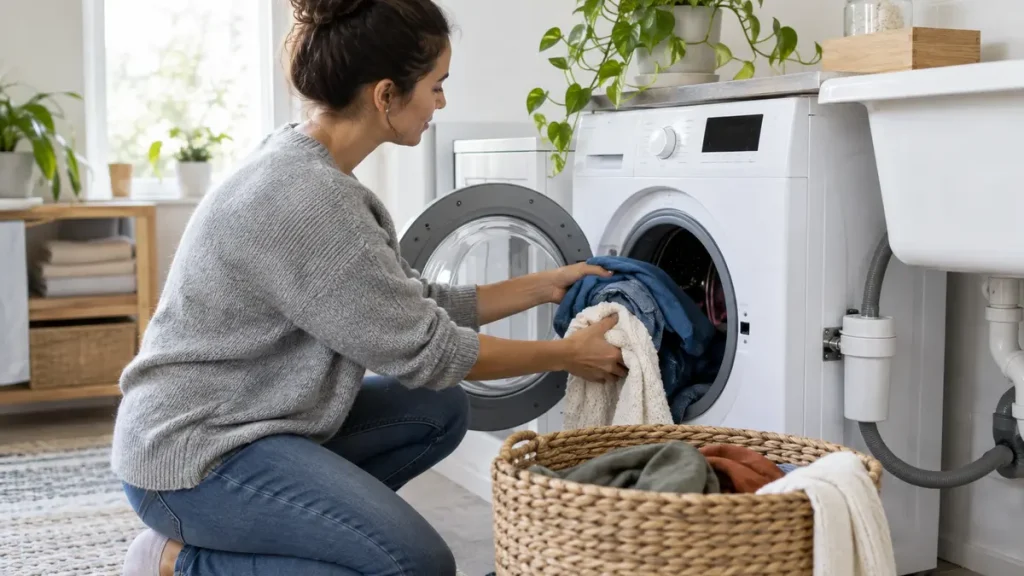
- Rinse thoroughly and dry completely using a label-approved method.
- Clean the inspection surface and wash your hands before handling other clean textiles.
| Garment type | Practical first-clean approach | What to avoid |
|---|---|---|
| Everyday cotton or sturdy blends | Machine wash and dry as directed on the label | Overloading the washer, which reduces movement and rinsing |
| Wool, silk, structured jackets, or embellished pieces | Follow hand-wash or professional-clean instructions | Hot water, high heat, twisting, or improvised soaking |
| Activewear and elastic garments | Use label-compatible detergent and moderate heat | Excess heat that can damage stretch fibers |
| Shoes, hats, and bags | Clean removable parts and surfaces according to material guidance; air-dry fully | Machine washing unless the maker’s instructions permit it |
Match heat and chemistry to the actual risk
Temperature can improve microbial reduction, but the useful temperature depends on the organism, exposure, detergent, cycle, and fabric. The laundry-science review reports that heat, chemistry, and mechanical action work together; it does not justify treating every secondhand shirt like contaminated healthcare linen. High heat can shrink wool, set some stains, fade dyes, weaken elastic, and increase energy use.
Reserve more intensive measures for a specific reason. For example, the CDC advises people with ringworm not to share clothing, towels, or sheets and to keep personal items clean. If clothing came from a person with a diagnosed contagious condition, follow the clinician’s or public-health instructions for that condition rather than relying on a general thrift-clothing checklist.
Safety note: If anyone in the household is immunocompromised, pregnant, managing severe eczema, or recovering from surgery, ask their clinician whether additional precautions are appropriate for close-contact textiles. Individual risk can change the sensible threshold.
When the care label limits heat
If a garment cannot tolerate a recommended high-temperature process for a known exposure, do not guess. Professional textile cleaning may be appropriate, or the item may not be worth keeping. Freezing, sunlight, fragrance sprays, and casual steaming should not be presented as universal substitutes; effectiveness varies by organism, time, temperature, and fabric construction.
Protect sensitive skin without overcomplicating laundry
Itching after wearing a thrifted garment does not prove infection. Residual fragrance, detergent, dye, metal hardware, rough fibers, or finishing chemicals can irritate skin or trigger contact dermatitis. The American Academy of Dermatology notes that clothing dyes, metals, and fabrics can cause reactions, and recommends fragrance-free products for people avoiding fragrance exposure.
For sensitive skin, a straightforward first wash is often the most useful test: use a fragrance-free, dye-free detergent; skip scent beads and fabric softener; rinse thoroughly; and wear the clean item briefly before a full day. Stop wearing it if a rash, burning, swelling, or hives appear. Persistent, spreading, painful, blistering, or infected-looking skin changes deserve medical evaluation.
- Choose loose, smooth fabrics when friction worsens symptoms.
- Place a barrier layer under rough wool or irritating seams.
- Replace corroded metal fasteners if they contact skin.
- Keep a note of the fabric, detergent, and symptoms if reactions recur.
- Seek urgent help for breathing difficulty, facial swelling, or other signs of a severe allergic reaction.
Handle stains, odors, and repairs in the right order
Identify a stain before applying heat because drying can make some stains harder to remove. Test a treatment on a hidden area, use the smallest effective amount, and rinse as directed. Persistent odor may come from trapped body oils, smoke residue, mildew, fragrance, or degraded foam. Masking it with perfume does not remove the source.
Repair planning also belongs before aggressive cleaning. Stabilize open seams, remove failing foam shoulder pads, secure loose beads, and cover sharp zipper edges. After cleaning, inspect again in bright light. A small repair can return an item to service; crumbling coatings, extensive mold, or material that sheds sticky residue may indicate the item has reached the end of safe, practical use.
| Problem | Lower-waste response | Stop or escalate when |
|---|---|---|
| Small washable stain | Spot-treat according to fiber and care directions, then wash | The stain may be chemical, biological, or damaged by treatment |
| Loose seam or missing button | Repair with matching thread or a recovered button | The surrounding fabric tears with gentle tension |
| Storage odor | Wash, rinse, and dry fully; repeat once if label permits | Odor returns with dampness or visible mold appears |
| Peeling coating or degraded foam | Assess whether the component can be safely replaced | Particles continue shedding or residue contacts skin |
Use extra caution with high-contact items
Underwear, swimwear, socks, hats, shoes, bedding, and children’s dress-up clothes have more direct skin contact or harder-to-clean construction. That does not make every used item unacceptable, but inspection standards should be higher. Avoid pieces with persistent bodily-fluid stains, damaged absorbent areas, sharp hardware, or padding that cannot be cleaned and fully dried.
Helmets and other protective gear need a separate safety assessment. Hidden impact damage, degraded foam, missing certification labels, or an unknown history may matter more than surface cleanliness. Follow current manufacturer guidance and relevant safety standards; a clean appearance cannot verify structural protection.
Build a repeatable thrift-to-closet routine
A consistent station prevents forgotten bags from mixing with clean clothes and makes decisions quicker. Keep a washable bin near the laundry area, a seam ripper and basic repair kit, mesh wash bags, a fragrance-free detergent option, and a phone note for unfamiliar care symbols. Photograph the care label before it fades.
Use this decision sequence for every item:
- Inspect: Is it dry, intact, and free of concerning contamination or pests?
- Identify: What are the fiber content and label-approved methods?
- Isolate: Keep it separate until its first clean.
- Clean: Use the least aggressive effective method and dry fully.
- Recheck: Confirm odor, residue, stains, and damage are resolved before wearing or storing.
- Repair or release: Mend usable damage; responsibly pass on, recycle where accepted, or discard items that cannot be made safe and functional.
Make the sustainable choice last
The environmental benefit of secondhand clothing grows when the piece is genuinely used. Buy for fit and function, not merely because an item is inexpensive. Check construction quality, choose fabrics you can realistically maintain, and avoid bringing home items that require cleaning methods you will not use. Proper washing loads, line drying when suitable, timely repair, and thoughtful storage can extend service life.
When an item no longer works for you but remains clean and wearable, resell, swap, or donate it according to the recipient organization’s standards. Textile recycling is location-dependent and is not permission to send wet, moldy, or contaminated material into a donation stream.
Bottom line
Secondhand clothing hygiene is mainly a process of inspection, label-aware cleaning, complete drying, and honest judgment. Ordinary washable garments generally need an ordinary first wash, not blanket disinfection. Escalate only for a known exposure, visible pests, severe contamination, or a vulnerable household member. This protects skin, preserves fabric, and makes reuse more practical.
General information cannot replace individualized medical, pest-control, or textile-care advice. Seek professional guidance for a persistent rash, signs of infection, suspected infestation, hazardous contamination, or any garment whose safe cleaning method is unclear.
Sources
- U.S. Environmental Protection Agency: Textiles material-specific data
- Federal Trade Commission: Complying with the Care Labeling Rule
- Centers for Disease Control and Prevention: Cleaning and disinfecting
- Centers for Disease Control and Prevention: Ringworm prevention
- American Academy of Dermatology: Clothing and contact dermatitis
- Applied and Environmental Microbiology: Laundry hygiene and odor control review