Sustainable grocery shopping is not about building a perfect cart or turning every meal into an environmental calculation. It is a practical way to buy foods that are more likely to be eaten, more likely to nourish you, and less likely to become waste. For most households, the biggest wins come from simple repeatable habits: planning meals around foods you already have, choosing flexible nutrient-dense staples, storing perishables safely, and using more plant-forward proteins without treating any single food as magic.
This guide focuses on realistic choices for everyday shoppers. It does not rank every food by carbon footprint, and it does not replace personal medical or nutrition advice. Instead, it shows how to build a lower-waste grocery routine that still respects health needs, budget limits, cultural preferences, and food safety.
Start With the Food You Will Actually Eat
The most sustainable food is often the food that gets used. The U.S. Environmental Protection Agency explains that preventing wasted food is the preferred approach because the resources used to grow, process, transport, and prepare food are also wasted when food is thrown away. That makes meal planning, realistic portions, and flexible shopping lists more powerful than they may seem.
A useful weekly starting point is to check your refrigerator, freezer, and pantry before making a list. Look for produce that needs to be used soon, cooked grains that can become a quick bowl, or beans that can stretch a soup or salad. Then buy around those ingredients instead of starting from a blank page.
Lower-impact shopping works best when it begins with real household behavior: buy foods you can store safely, prepare comfortably, and finish before they spoil.
Build the Cart Around Nutrient-Dense Staples
Health still matters. The World Health Organization describes healthy eating patterns as diverse and built around fruits, vegetables, pulses, whole grains, nuts, seeds, and appropriate protein foods, while limiting foods high in sodium, free sugars, and unhealthy fats. The Dietary Guidelines for Americans similarly emphasize nutrient-dense choices that help people meet food group needs within calorie limits.
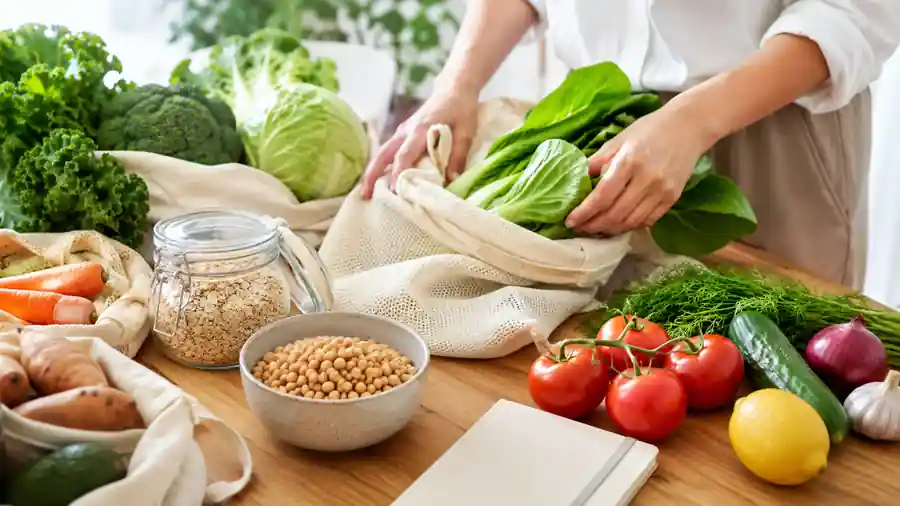
For sustainable grocery shopping, that means the center of the cart can be simple: vegetables and fruit you know how to use, whole grains such as oats or brown rice, legumes such as lentils or beans, nuts or seeds if they fit your budget, and proteins that match your health needs. Frozen and canned options can count too, especially when they prevent spoilage or make healthy meals easier on busy days.
| Cart anchor | Health role | Lower-waste advantage | Practical example |
|---|---|---|---|
| Beans, peas, and lentils | Protein, fiber, minerals | Shelf-stable or freezer-friendly | Lentil soup, bean tacos, chickpea salad |
| Whole grains | Fiber and steady meal base | Long pantry life when stored dry | Oats, barley, brown rice, whole-grain pasta |
| Frozen vegetables | Vegetable intake without prep pressure | Use only what you need | Frozen spinach in eggs, peas in rice bowls |
| Fresh produce you enjoy | Vitamins, minerals, texture | More likely to be eaten | Carrots, apples, leafy greens, tomatoes |
Use More Plant-Forward Proteins Without All-or-Nothing Rules
Plant-forward does not have to mean vegetarian or vegan. It can mean shifting some meals toward beans, lentils, peas, soy foods, nuts, seeds, and whole grains while keeping animal-source foods where they fit your preferences, medical needs, and budget. WHO notes that for many adults, moving toward more plant-based protein sources may bring health benefits, especially when the shift replaces some red meat rather than simply adding more food overall.
Evidence note: A plant-forward pattern is strongest when it is built from minimally processed foods, not when it relies mainly on salty, refined, or highly processed substitutes. If you have kidney disease, food allergies, digestive conditions, pregnancy-related concerns, or a medically prescribed diet, ask a qualified clinician or registered dietitian before making major changes.
Try partial swaps first
Partial swaps are often easier to sustain. Replace half the ground meat in chili with beans, add lentils to a tomato sauce, or use tofu in one stir-fry each week. These choices can lower grocery costs and expand meal variety without forcing a sudden overhaul.
Keep protein adequacy in view
Older adults, athletes, people recovering from illness, and those with higher protein needs should be especially careful not to reduce total protein by accident. Sustainable choices should still leave meals satisfying and nutritionally adequate.
Plan Around Food Waste Before You Shop
The FDA points out that consumer confusion about date labels can contribute to wasted food, and that food safety should remain part of waste reduction. The goal is not to keep questionable food. The goal is to understand labels, store food properly, and use perishable ingredients before they deteriorate.
- Choose two or three meals that use overlapping ingredients.
- List perishables first, then pantry staples that complete those meals.
- Buy delicate greens and berries only in amounts you can use within a few days.
- Use your freezer for bread, cooked grains, sauces, and extra portions.
- Check leftovers before ordering takeout or starting a new recipe.
| Waste point | Common cause | Better habit | Health or safety note |
|---|---|---|---|
| Produce drawer | Buying aspirational vegetables | Buy familiar produce plus one new item | Wash and prep only when appropriate for storage |
| Dairy or alternatives | Containers too large | Choose a size you finish reliably | Discard if odor, texture, or mold suggests spoilage |
| Leftovers | No plan for reuse | Label and schedule one leftover meal | Refrigerate promptly and reheat safely |
| Pantry staples | Hidden duplicates | Use a pantry list before shopping | Store dry goods sealed and dry |
Do Not Confuse Sustainable With Automatically Healthy
Some products marketed as sustainable are still high in sodium, added sugars, saturated fat, or refined starches. Others may be nutritious but packaged in ways that do not fit your household. A lower-impact cart should be judged by the whole pattern, not by a single label or claim on the front of a package.
- Read the Nutrition Facts panel when choosing packaged foods.
- Compare sodium in soups, sauces, breads, and meat alternatives.
- Choose unsweetened or lightly sweetened options when practical.
- Watch portion size for snack foods, even if they are plant-based.
- Prefer foods your household will finish over novelty items that may sit unused.
Safety note: Do not use sustainability goals to justify eating spoiled food. If a food has mold where it should not, an off smell, unusual texture, or signs of unsafe storage, discard it.
Use Labels and Dates Thoughtfully
Date labels can be confusing. FDA explains that, except for infant formula, federal law generally does not require quality-based date labels on packaged foods. Many dates are about quality rather than safety, but that does not mean every food is safe indefinitely. Storage conditions, package integrity, and visible spoilage still matter.
Separate quality from safety
A best-quality date may tell you when flavor or texture is expected to be best. A food can sometimes still be acceptable after that date, but consumers should examine it and use safe storage guidance. Infant formula is different and should be handled according to the date and label instructions.
| Shopping decision | Better question | Lower-waste move | When to be cautious |
|---|---|---|---|
| Discounted produce | Can I use this today or tomorrow? | Buy for soup, smoothies, roasting, or sauce | Avoid slimy, moldy, or foul-smelling items |
| Large package | Will we finish it before quality drops? | Split and freeze portions | Do not refreeze food handled unsafely |
| Near-date packaged food | Is the date quality-related? | Use soon and inspect carefully | Follow special rules for infant formula |
| Bulk-bin item | Do I know how much I need? | Buy the exact amount for a recipe | Choose clean bins and store sealed at home |
Think Beyond Single-Food Footprints
The FAO and WHO describe sustainable healthy diets as patterns that support health while considering environmental, economic, and sociocultural dimensions. That broader view is helpful because shoppers do not eat isolated ingredients. They eat meals shaped by access, time, skill, family needs, and culture.
This is why a practical approach beats a rigid ranking system. A canned bean meal that your family likes may be more useful than a fragile specialty green that spoils. Frozen vegetables may be better than fresh vegetables that routinely go unused. A lower-waste diet is not always the one that looks most virtuous in the cart; it is the one that becomes nourishing meals.
Choose Packaging and Portions Pragmatically
Packaging choices matter, but they should be balanced against food waste and food safety. A larger package may use less packaging per serving, but only if you actually finish it. A smaller package may be the more sustainable choice for a one-person household if it prevents spoilage. Reusable bags and containers can help, but the main decision is still whether the food will be eaten.
When possible, choose durable staples in recyclable or minimal packaging, bring reusable bags, and avoid individually wrapped items when a larger package will be used safely. But do not let packaging concerns crowd out nutrition. A bag of frozen vegetables in plastic can still be a sensible choice if it helps you eat vegetables regularly and prevents fresh produce waste.
A One-Week Sustainable Grocery Framework
Use a simple framework rather than a strict meal plan. Pick one grain, two proteins, three vegetables, two fruits, one flavor base, and one backup freezer item. This keeps the cart flexible and reduces the chance that one missed recipe ruins the week.
For example, a balanced cart might include oats, brown rice, lentils, eggs, frozen spinach, carrots, cabbage, apples, oranges, canned tomatoes, and frozen peas. Those ingredients can become breakfast oats, lentil soup, grain bowls, omelets, and quick stir-fries. The same framework can also adapt to gluten-free, vegetarian, lower-sodium, or culturally specific food preferences.
Bottom Line
Sustainable grocery shopping is most effective when it is grounded in health, food safety, and real household habits. Start by wasting less food, then build meals around nutrient-dense staples, plant-forward proteins, practical storage, and portions you can finish. The goal is not perfection. It is a grocery routine that turns more of what you buy into safe, satisfying meals.
Sources
- U.S. Environmental Protection Agency: Prevent Wasted Food Through Source Reduction
- U.S. Environmental Protection Agency: Wasted Food Scale
- U.S. Food and Drug Administration: How to Cut Food Waste and Maintain Food Safety
- World Health Organization: Healthy Diet
- FAO and WHO: Sustainable Healthy Diets, Guiding Principles
- Dietary Guidelines for Americans: Federal Dietary Guidance