Falls are not an inevitable part of aging, but fall risk can rise when strength, balance, vision, medications, footwear, home layout, or recent illness begin to change. This guide explains how fall prevention exercises fit into a broader healthy-aging plan, what the strongest evidence supports, and how to think about safety before starting or progressing a routine.
The goal is practical, not heroic: build steadier daily movement, keep legs and trunk responsive, and know when a clinician or physical therapist should individualize the plan. Safety note: anyone with recent falls, dizziness, fainting, new weakness, severe pain, neurological symptoms, or medication changes should seek professional guidance before relying on a home routine.
Why Fall Prevention Belongs in Healthy Aging
Falls can affect independence because they may lead to injury, fear of movement, reduced activity, and further loss of strength. The CDC STEADI older adult fall prevention initiative was created to help clinicians screen, assess, and intervene for adults at risk of falling. The National Institute on Aging falls and falls prevention resource also emphasizes that fall risk often has more than one cause.
Exercise matters because balance is not a single skill. Standing from a chair, turning, stepping around a rug, carrying groceries, and climbing stairs all require the brain, eyes, inner ear, muscles, joints, and reaction time to cooperate. A useful program trains that cooperation gradually.
What The Evidence Supports
The strongest practical message is consistent: exercise programs that include balance and functional training can reduce falls among community-dwelling older adults, especially those at increased risk. The USPSTF recommendation on falls prevention interventions recommends exercise interventions for community-dwelling adults age 65 or older who are at increased fall risk, and notes common components such as gait, balance, functional training, and strength work.
A Cochrane review on exercise for preventing falls found that balance and functional training reduced falls compared with inactive control groups, while multicomponent programs and Tai Chi may also help. These findings do not mean every exercise is equally useful or safe for every person. They support structured, progressive movement, not random challenges done without support.
| Exercise ingredient | Why it matters | Everyday movement it supports |
|---|---|---|
| Balance practice | Improves control while weight shifts or stance narrows | Turning, reaching, stepping around obstacles |
| Functional strength | Builds leg and hip capacity for repeated daily tasks | Chair rises, stair climbing, getting into a car |
| Gait and stepping drills | Trains controlled foot placement and recovery steps | Walking on uneven ground, changing direction |
| Flexibility and mobility | Helps comfortable range of motion without forcing joints | Looking over a shoulder, bending, dressing |
Start With Risk Awareness, Not Guesswork
Before adding exercises, review what might make falling more likely. Risk can come from poor lighting, loose rugs, foot pain, vision changes, blood pressure drops, sedating medications, alcohol use, dehydration, weak legs, or fear after a previous fall. The CDC STEADI patient materials include checklists and practical prompts, and the CDC STEADI patient and caregiver resources include home-safety and prevention materials.
Evidence note: exercise is important, but it is only one part of fall prevention when medical, environmental, or medication-related risks are present. A person who feels unsteady when standing, has fallen more than once, or needs furniture to walk across a room should not simply increase difficulty. That is a reason to ask for a clinical assessment.
Questions To Ask Before You Begin
- Have you fallen, nearly fallen, or changed your walking pattern in the past year?
- Do you feel dizzy when standing, turning, or looking up?
- Do your shoes, floors, stairs, or bathroom setup feel unsafe?
- Have medications, vision, hearing, or blood pressure recently changed?
- Can you practice near a stable counter or heavy chair without rushing?
The Core Exercise Categories
A balanced routine usually combines supported balance practice, lower-body strength, controlled stepping, and general physical activity. The CDC guide to physical activity for older adults lists balance activities such as standing on one leg or walking backward and notes that strengthening the back, abdomen, and legs can also improve balance.
For many adults, the safest beginning is not a difficult pose. It is repeated, high-quality practice of simple movements: stand tall, shift weight, rise from a chair, step sideways, and walk with attention. A physical therapist can adapt these for arthritis, neuropathy, Parkinson disease, stroke history, osteoporosis, low vision, or recent surgery.
Balance Exercises
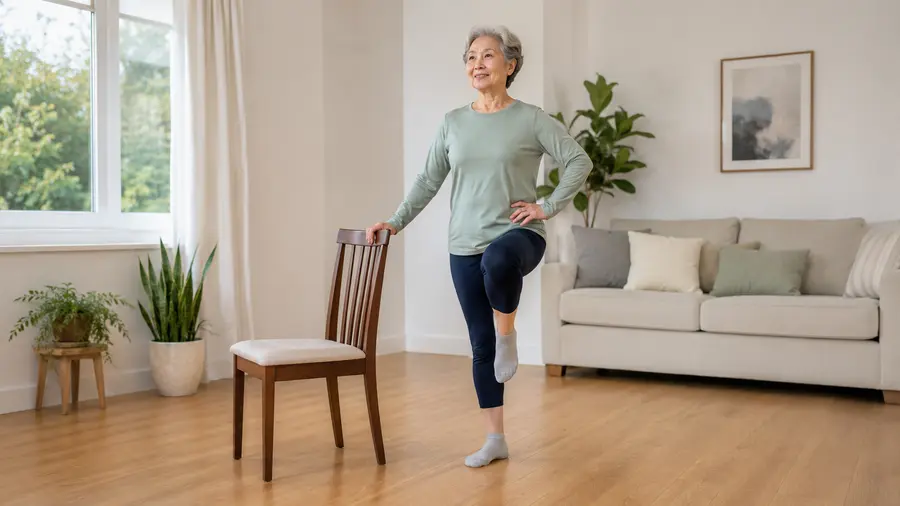
Balance practice should challenge steadiness without creating panic. Examples include feet-apart standing, semi-tandem stance, gentle weight shifts, side steps near a counter, and supported single-leg standing. The support surface should be close enough that you can touch it without reaching.
Strength Exercises
Strength work often focuses on the hips, thighs, calves, trunk, and back because these areas help with standing, walking, and recovery steps. Chair rises, wall push-ups, heel raises, mini-squats to a chair, and step-ups on a safe low step may be useful starting points when appropriate.
Gait And Functional Practice
Functional practice trains the tasks that matter most: turning slowly, stepping over a low object, changing direction, carrying a light item, and standing from different seat heights. The point is to make daily motion steadier, not to collect hard exercises.
A Simple Progression Framework
Progression should be boring in the best way: small, consistent, and reversible. If an exercise causes pain, dizziness, chest symptoms, unusual shortness of breath, or a feeling that you might fall, stop and seek advice. For many people, a few short sessions each week are easier to sustain than one long session that causes fatigue.
- Choose a clear practice area with good lighting, supportive shoes, and a stable surface nearby.
- Begin with the easiest version that feels controlled for the full set.
- Add repetitions before removing support or narrowing your stance.
- Change only one variable at a time: duration, repetitions, support, speed, or surface.
- Review progress after two to four weeks and adjust with professional help if symptoms or falls occur.
| Level | What it may look like | Progress only when |
|---|---|---|
| Foundation | Chair rises with hands, feet-apart standing, gentle weight shifts | You feel steady and can breathe normally |
| Building | Chair rises with less hand help, side steps near a counter, heel raises | Movements stay smooth without grabbing support |
| Functional | Step practice, controlled turns, light carry tasks, longer walking | You can recover balance without rushing |
| Individualized | Tai Chi, supervised resistance work, or physical therapy drills | A qualified professional confirms it fits your risks |
How Often Should Older Adults Practice?
There is no single schedule that fits everyone. The World Guidelines for Falls Prevention and Management for Older Adults recommend balance-challenging and functional exercises for community-dwelling older adults, with sessions three or more times weekly when feasible, individualized and progressed over time. That does not mean every person should start with three hard workouts. It means consistency and progression matter.
General activity also supports aging well. For adults who can do so safely, walking, cycling, water exercise, gardening, dancing, or low-impact classes can build endurance and confidence. Balance-specific exercises, however, should still be included because walking alone may not challenge quick stepping, turning, or controlled weight shifts enough.
Red Flags That Need Professional Input
Home exercise advice should never replace individualized care. Some fall risks need medical review, vision care, medication review, home modifications, assistive devices, or physical therapy. It is especially important to seek help when symptoms are new, worsening, or connected to a fall.
| Situation | Why it matters | Safer next step |
|---|---|---|
| Fall with injury, head impact, or severe pain | There may be fracture, bleeding, or another urgent issue | Seek urgent medical evaluation |
| Dizziness, fainting, or sudden weakness | Could involve blood pressure, medication, heart, or neurological causes | Contact a clinician promptly |
| Repeated near-falls or furniture walking | Suggests balance, gait, strength, or environmental risk | Ask about fall-risk assessment or physical therapy |
| New vision changes or foot numbness | Sensory changes can affect safe movement | Arrange vision, foot, or medical review |
Make The Home Support The Exercise Plan
Exercise works best when the environment stops fighting back. Good lighting, secure handrails, clear walking paths, non-slip bathroom surfaces, and well-fitting shoes reduce the number of surprises your balance system must handle. A safer home also makes it easier to practice consistently because each session starts from a calmer baseline.
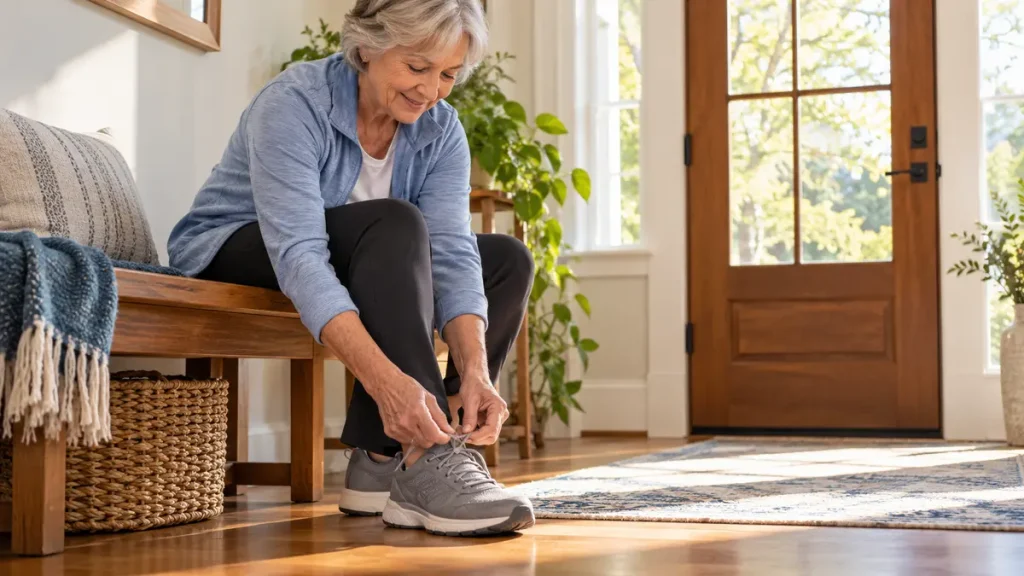
Practical changes can be simple: remove loose cords from walkways, keep frequently used items between shoulder and hip height, add night lights, clean spills quickly, and avoid socks-only walking on slick floors. If a cane, walker, grab bar, or shoe insert has been recommended, use it as directed rather than treating it as a setback.
Bottom Line
Fall prevention exercises are less about proving fitness and more about preserving options: getting out of a chair, turning with confidence, walking safely, and staying engaged in daily life. The best-supported routines combine balance and functional practice with strength work, progress gradually, and sit alongside medication review, vision care, footwear, and home safety when needed.
Think of fall prevention as skill maintenance for independence: small, repeated, well-supported movements can make everyday life steadier when they are matched to the person and progressed safely.
If you are healthy, steady, and already active, a simple balance-and-strength routine may be a reasonable next step. If you have fallen, feel unsteady, have chronic conditions, are pregnant, take sedating or blood-pressure medications, or have new symptoms, get individualized guidance before increasing challenge.
Sources
- CDC STEADI older adult fall prevention initiative
- CDC STEADI patient and caregiver resources
- National Institute on Aging falls and falls prevention
- USPSTF falls prevention interventions recommendation
- Cochrane review on exercise for preventing falls
- CDC physical activity guidance for older adults
- World Guidelines for Falls Prevention and Management for Older Adults