Feet are easy to ignore until pain, a blister, or an awkward shoe begins to limit walking. After 60, small changes in skin, nails, joints, sensation, and circulation can make routine foot care more important. The goal is not to chase perfectly smooth feet or tolerate every change as “just aging.” It is to protect the skin, notice problems early, choose footwear that supports steady movement, and know when a clinician should take a closer look.
This guide explains a simple routine for generally healthy adults and highlights extra precautions for people with diabetes, poor circulation, reduced sensation, arthritis, or difficulty seeing or reaching their feet. It provides general education, not a diagnosis or a personalized treatment plan.
Why foot care can matter more with age
Each foot contains many bones, joints, muscles, tendons, and ligaments that share the work of standing and walking. Aging does not automatically cause foot disease, but years of loading, changes in joint mobility, thinner or drier skin, changes in foot shape, and chronic conditions can alter how the feet tolerate pressure. Ill-fitting shoes can add friction and crowd the toes.
Foot discomfort also has consequences beyond the foot. Pain may shorten a person’s stride, reduce activity, or make them feel less steady. The National Institute on Aging notes that painful foot problems and unsafe footwear can contribute to fall risk. A practical routine therefore supports mobility as well as skin and nail health.
| Change you may notice | Possible everyday effect | Useful response |
|---|---|---|
| Dry, less flexible skin | Cracks or irritation at pressure points | Moisturize intact skin and check for splits |
| Changing foot width or shape | Old shoes rub or squeeze | Recheck size and fit rather than relying on an old number |
| Stiff or painful joints | Shorter walks or altered gait | Choose supportive footwear and seek assessment if pain persists |
| Reduced sensation or circulation | Injuries may be missed or heal slowly | Inspect daily and involve a clinician early |
Healthy foot care is less about cosmetic perfection and more about preserving intact skin, comfortable movement, and an early-warning system for changes that deserve attention.
Build a brief daily foot check
A check can take less than a minute. Sit in good light and look at the tops, soles, heels, sides, nails, and spaces between the toes. A hand mirror can help with the soles; if bending or vision is difficult, ask a trusted person or clinician for help. Compare one foot with the other and notice what is new rather than trying to identify every condition yourself.
What to look and feel for
- Cuts, blisters, cracks, drainage, or areas rubbed raw
- Redness, swelling, warmth, unusual coolness, or color change
- Corns, calluses, or pressure marks that are growing or painful
- Thick, discolored, brittle, or ingrown nails
- Numbness, tingling, burning, or a new loss of temperature sense
- A change in shape, balance, walking comfort, or shoe fit
Safety note: People with diabetes, peripheral artery disease, neuropathy, or a previous foot ulcer should follow their clinician’s inspection and follow-up plan. Reduced sensation can hide an injury, while reduced blood flow can slow healing.
Wash, dry, and moisturize without damaging skin
Wash feet with warm, not hot, water and a mild cleanser. Test the water with a hand or thermometer if sensation is reduced. Long soaking can leave skin waterlogged and more vulnerable, so a normal wash is usually preferable. Pat dry carefully, especially between the toes.
Apply a plain moisturizer to dry areas on the tops, soles, and heels. Avoid putting lotion between the toes, where trapped moisture can encourage skin breakdown or fungal growth. Do not cut, shave, or use acid-containing corn removers on thick skin without professional advice. These methods can create burns or wounds, especially when sensation or circulation is impaired.
| Routine step | Generally helpful | Use caution |
|---|---|---|
| Cleaning | Brief wash in warm water | Very hot water or prolonged soaking |
| Drying | Pat dry, including between toes | Leaving damp skin between toes |
| Moisturizing | Thin layer on dry intact skin | Lotion between toes or on an open wound |
| Callus care | Professional assessment when painful or thick | Blades, acids, or aggressive filing at home |
Trim nails with visibility and reach in mind
Toenails are easier to trim after washing, when they are clean and slightly softer. Cut straight across and gently smooth sharp corners with a file. Avoid digging into the sides, which can irritate the skin and contribute to an ingrown nail. Use clean tools and stop if the task hurts.
Thick nails can be difficult to cut safely. Poor vision, hand tremor, limited hip mobility, anticoagulant use, diabetes, poor circulation, or reduced sensation also changes the risk. In those situations, a podiatrist or another qualified foot-care professional can help. Do not force a home trim when you cannot clearly see, reach, or feel what you are doing.
Choose shoes for fit, stability, and the activity
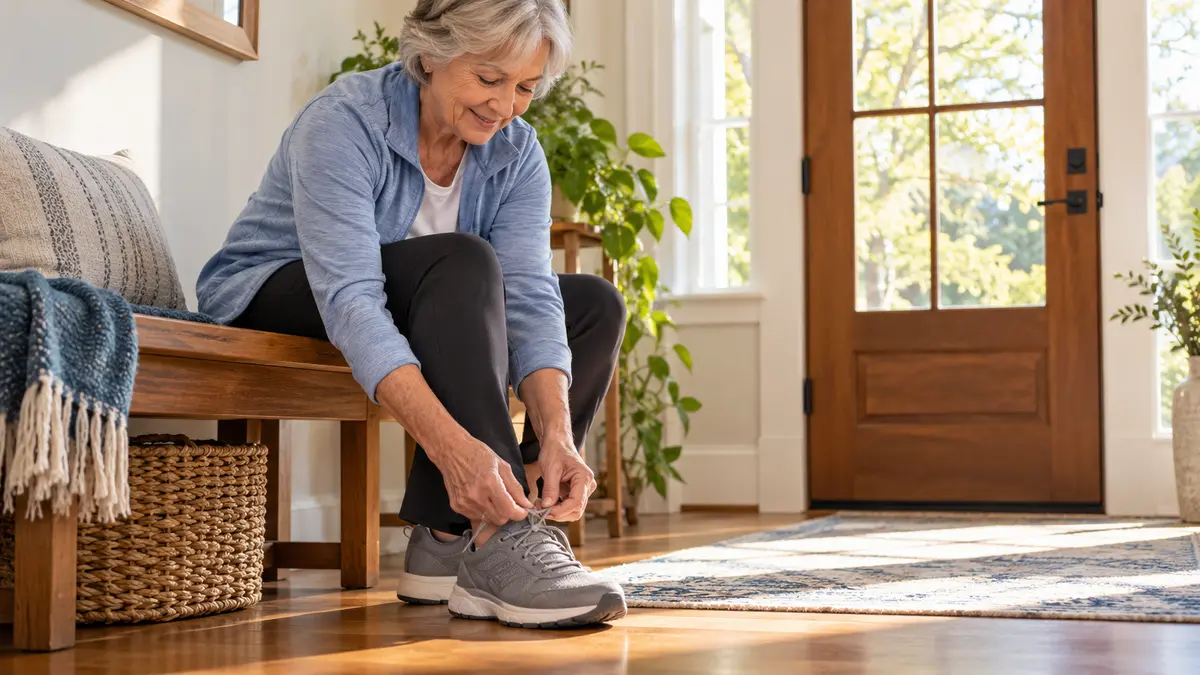
Shoe size can change over time, and the two feet may not be identical. Have both feet measured while standing, ideally later in the day when feet may be slightly larger, and fit the larger foot. Bring the socks or orthotics you normally use. A shoe should feel comfortable in the store; do not count on a painful shoe becoming safe after a long break-in period.
A practical fitting sequence
- Check that the toe box lets the toes lie naturally without rubbing the top or sides.
- Confirm that the heel is held securely without slipping or being pinched.
- Look for a low, stable heel and a nonslip sole appropriate to the surface and activity.
- Walk, turn, and use a few steps if available; notice pressure, wobbling, or toe gripping.
- Inspect the inside for rough seams, folded insoles, pebbles, or worn areas before each wear.
The American Podiatric Medical Association suggests checking heel firmness, appropriate forefoot bend, and resistance to excessive twisting. For fall prevention, the National Institute on Aging recommends low-heeled, nonskid, rubber-soled footwear and warns against walking on stairs or floors in socks or smooth-soled slippers.
| Feature | What it may help with | Potential problem sign |
|---|---|---|
| Roomy toe box | Reduces crowding and friction | Toes overlap or touch the shoe edge |
| Secure heel and closure | Limits sliding inside the shoe | Heel lifts or foot must grip to keep shoe on |
| Low, broad heel | Supports a stable base | High, narrow, or unstable heel |
| Activity-matched sole | Provides traction and cushioning | Worn tread, excessive stiffness, or slippery surface |
Respond to pain, corns, calluses, and shape changes
Bunions, hammertoes, fallen arches, corns, and calluses are common reasons shoes stop fitting comfortably. A corn or callus is often a response to repeated pressure or friction; simply removing thick skin without correcting the pressure can allow it to return. A wider toe box, different lacing, shoe modification, or an assessment of gait may help, but the right choice depends on the cause.
Persistent pain is not a normal price of aging. Note where it occurs, what activity brings it on, how long it lasts, and whether there is swelling, redness, numbness, or a change in function. That information helps a primary care clinician, podiatrist, physical therapist, or foot-and-ankle specialist decide what evaluation is appropriate. Avoid assuming an insert or orthotic will solve every problem; an uncomfortable device can create new pressure points.
When self-care should pause
Stop a new exercise or footwear experiment if it causes sharp pain, skin injury, increasing swelling, or altered walking. If pain began after a fall or injury, or you cannot bear weight, seek timely assessment rather than trying to walk it off. Sudden severe symptoms require more urgent evaluation.
Know the extra precautions for diabetes and poor circulation
Diabetes can damage nerves and reduce the ability to feel pain, heat, or cold. It can also contribute to poor blood flow and make wounds harder to heal. The Centers for Disease Control and Prevention advises people with diabetes to check their feet every day, avoid going barefoot, wear well-fitting shoes and socks, and have their feet checked during health visits.
Peripheral artery disease, or PAD, reduces blood flow to the limbs. The National Heart, Lung, and Blood Institute lists warning signs such as leg aching or cramping with walking, one foot feeling colder, color changes, numbness or weakness, and sores that heal slowly. These signs need medical assessment; a home foot routine cannot diagnose or correct a circulation problem.
| Finding | Why it matters | Next step |
|---|---|---|
| New blister, cut, or open area with diabetes | Reduced feeling may mask severity | Contact the care team promptly |
| Wound that heals slowly | May reflect infection or poor blood flow | Arrange medical evaluation |
| Calf or foot pain with walking that eases with rest | Can be a PAD symptom | Discuss with a clinician |
| Sudden cold, pale, blue, numb, or severely painful foot | May signal an acute blood-flow emergency | Seek emergency medical help |
Use movement to support feet, not punish them
Comfortable walking and other weight-bearing activity can help maintain strength and function, but activity should be matched to health, symptoms, and current capacity. Start gradually, wear suitable shoes, and check the skin afterward when beginning a new routine. Cycling or swimming may reduce pressure on painful feet for some people, but a clinician can help select activities when arthritis, neuropathy, ulcers, severe swelling, or balance problems are present.
Simple ankle motion and toe movement can be part of a daily mobility routine, but exercises are not a substitute for evaluating persistent pain or weakness. If foot discomfort changes how you walk, a physical therapist or podiatrist may be able to identify strength, flexibility, balance, or footwear factors.
Decide how quickly to seek care
Some changes can wait for a routine appointment; others should not. Contact a clinician promptly for a new sore, drainage, spreading redness, warmth, swelling, an ingrown nail with inflammation, or a wound that is not improving. New numbness, burning, marked color or temperature differences, or pain that repeatedly appears with walking also deserves assessment.
Seek urgent or emergency help for a suddenly cold, pale or blue foot; sudden loss of sensation or movement; severe pain; a major injury; inability to bear weight; or signs of serious infection such as rapidly spreading redness with fever or chills. People with diabetes, PAD, immune suppression, or a previous ulcer should use the lower threshold established with their care team.
A five-minute weekly reset
Once a week, pair the daily check with a quick review: feel inside shoes for roughness, inspect tread and heel wear, launder socks, clean nail tools, and note any recurring pressure mark. Put a mirror and moisturizer where the routine happens. Small environmental choices make consistency easier than relying on memory.
Bottom line
Foot care after 60 is a practical mobility habit. Inspect the feet, wash and dry gently, moisturize the right areas, trim only when it is safe to do so, and choose shoes by fit and stability rather than the number on the box. Do not dismiss persistent pain, numbness, color change, or a slow-healing wound as ordinary aging.
For people with diabetes, poor circulation, reduced sensation, or difficulty seeing or reaching the feet, professional foot care is part of prevention. A brief routine cannot remove every risk, but it can make changes visible sooner and help keep walking safer and more comfortable.
Sources
- Centers for Disease Control and Prevention: Your Feet and Diabetes
- MedlinePlus: Foot Injuries and Disorders
- National Institute on Aging: Falls and Fractures in Older Adults
- National Heart, Lung, and Blood Institute: Peripheral Artery Disease Symptoms
- American Podiatric Medical Association: Balance-Boosting Footwear Tips for Older People