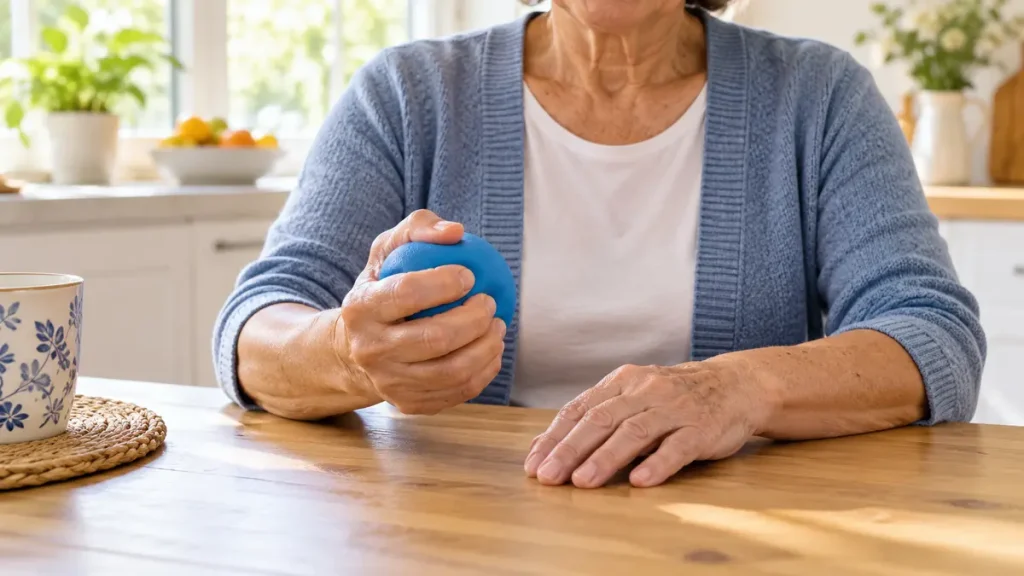
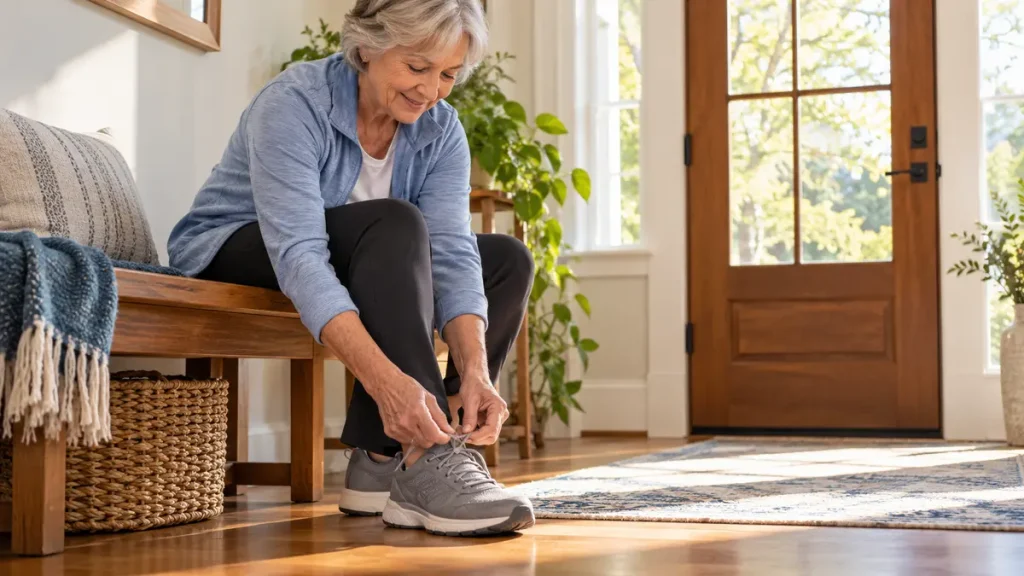
Functional fitness after 60 is not about chasing a younger body or copying a gym routine built for someone else. It is about training the movements that help you stand from a chair, carry groceries, climb steps, reach overhead, turn safely, and keep participating in the life you already value. This guide explains how to build a practical routine around strength, balance, endurance, and mobility while staying within general safety boundaries.
The most useful starting point is honest and modest: choose movements that already appear in your day, practice them with better control, then add challenge only when the current version feels steady. That approach can help people avoid the common boom-and-bust pattern of doing too much at once, getting sore or discouraged, and then stopping entirely.
Safety note: This article is general health education. People with chest pain, shortness of breath, dizziness, recent falls, severe pain, new neurological symptoms, uncontrolled chronic disease, or medication questions should seek individualized medical guidance before changing activity.
What Functional Fitness Means After 60
Functional fitness connects exercise to daily tasks. A squat becomes getting out of a chair. A carry becomes moving laundry or groceries. A step-up becomes climbing stairs. A reach becomes putting dishes away. The goal is not perfect performance; it is enough strength, coordination, and confidence to make ordinary movement feel less costly.
The Centers for Disease Control and Prevention says adults 65 and older need aerobic activity, muscle-strengthening activity, and balance work each week. That combination matters because daily life rarely asks for only one quality at a time. Walking to the mailbox, stepping over a curb, and carrying a bag all blend endurance, leg strength, balance, and attention.
| Daily task | Fitness quality | Training example |
|---|---|---|
| Standing from a low chair | Leg and hip strength | Chair sit-to-stand |
| Carrying groceries | Grip, trunk control, endurance | Farmer carry with light bags |
| Turning in a hallway | Balance and coordination | Slow step-turn practice near support |
| Reaching to a shelf | Shoulder mobility and posture | Wall slides or controlled overhead reach |
Start With the Four Movement Pillars
The National Institute on Aging resource highlighted by HHS describes four useful types of exercise for older adults: endurance, strength, balance, and flexibility. Functional fitness works best when all four appear across the week. A person may emphasize one pillar for a season, but neglecting any one of them can leave a gap that shows up during everyday tasks.
Strength for Standing, Lifting, and Carrying
Strength training helps preserve the ability to produce force. That matters for getting up from chairs, rising from the floor with assistance, carrying objects, opening heavy doors, and recovering from small losses of balance. The CDC recommends muscle-strengthening activities on at least two days per week for older adults, working major muscle groups.
Balance for Turning and Direction Changes
Balance is not only standing on one foot. It includes how the feet, eyes, joints, and brain coordinate while you turn, step sideways, look around, or move over uneven ground. Balance work should begin near a stable surface, such as a counter or sturdy chair, and progress slowly.
Endurance for Staying Power
Aerobic capacity supports the ability to walk, shop, garden, travel, and complete tasks without needing long recovery after every effort. Moderate activities can include brisk walking, water aerobics, cycling, dancing, or active gardening, depending on ability and preference.
A Simple Readiness Check
Before building a routine, notice how current daily movements feel. This is not a diagnostic test and should not replace clinical assessment. It is a practical self-check to identify where to start gently and where professional help may be wise.
| Question | What it may suggest | Practical next step |
|---|---|---|
| Do you use your hands to stand from most chairs? | Leg strength or confidence may need work | Begin with higher-chair sit-to-stands |
| Do you avoid stairs or curbs? | Step strength, balance, or pain may be limiting | Practice supported low step-ups if appropriate |
| Do you feel unsteady when turning? | Dynamic balance may need attention | Use counter-supported step-turns |
| Do symptoms stop activity? | A medical review may be needed | Ask a clinician before progressing |
Practical note: Progress should feel manageable. Mild muscle effort is expected, but sharp pain, pressure in the chest, faintness, or unusual breathlessness is a stop sign for medical advice.
Build a Weekly Functional Fitness Plan
The best plan is simple enough to repeat. For many older adults, a useful week includes two or three short strength-and-balance sessions, regular walking or other aerobic movement, and brief mobility practice. The Community Preventive Services Task Force has found that home-based exercise interventions for adults 65 and older can improve measures such as strength, balance, muscle power, and muscular endurance when they include specific exercises and regular sessions.
A weekly plan does not need to look the same for everyone. Someone who already walks daily may need more strength and balance practice. Someone returning after illness may begin with shorter movement snacks spread through the day. Someone with joint pain may benefit from water-based exercise, a physical therapy plan, or lower-impact variations. The common thread is regular practice that matches current capacity.
| Weekly element | Reason | Starter target |
|---|---|---|
| Aerobic movement | Supports stamina and heart health | Short walks or equivalent most days |
| Strength practice | Supports chair rise, lifting, and carrying | 2 nonconsecutive days weekly |
| Balance practice | Supports steadier steps and turns | 5 to 10 minutes, 3 days weekly |
| Mobility work | Supports reach, stride, and comfort | Brief daily gentle range of motion |
Five Foundational Movements
These movements translate well to daily life. They can be adapted by range of motion, support, speed, and load. The aim is controlled practice, not exhaustion.
- Chair sit-to-stand: Use a sturdy chair. Stand up and sit down with control, using hands as needed.
- Supported hinge: Practice reaching hips back slightly while holding a counter, similar to picking up an object safely.
- Step-up: Use a low step and support. Step up slowly, then step down with control.
- Carry: Walk a short distance with light bags, keeping posture tall and steps steady.
- Wall reach: Slide hands up a wall or reach overhead within a comfortable range.
For each movement, quality matters more than speed. A slower chair stand that uses both feet evenly is more useful than a rushed set that shifts all the work to one side. A light carry performed with steady breathing and clear foot placement is better than a heavy carry that changes posture or causes pain.
How to Progress Without Overdoing It
Progression can come from better control before heavier resistance. A person might first move through a smoother range, then add one or two repetitions, then reduce hand support, then add light load. The American Heart Association notes that adults should increase amount and intensity gradually over time, which fits functional fitness well.
- Choose one movement that matches a real daily task.
- Practice it at an easy level for one to two weeks.
- Add a small challenge only when form is steady.
- Keep at least one easier day between harder strength sessions.
- Return to the easier version after illness, travel, pain flare-ups, or poor sleep.
A helpful rule is to progress one variable at a time. If you add repetitions, avoid adding weight the same day. If you reduce hand support during balance work, keep the surface familiar and the session short. This keeps the nervous system and joints from receiving too many new demands at once.
When to Modify or Get Help
Functional fitness should respect medical history and current ability. The NHS advises older adults who have not exercised for some time, or who have medical conditions or concerns, to speak with a GP and make sure activity and intensity are appropriate. In the United States, that role may be filled by a primary care clinician, physical therapist, or other qualified professional.
Extra caution is appropriate after falls, fractures, joint replacement, uncontrolled blood pressure, dizziness, severe arthritis flare-ups, neuropathy, osteoporosis concerns, or new balance changes. A physical therapist can often help translate general movements into safer personal variations.
Make the Home Environment Part of Training
A home routine works best when the space supports success. Clear the path before walking drills, use shoes or bare feet according to professional advice and household safety, keep pets and loose rugs away during practice, and choose stable furniture. The Community Guide notes that effective home-based programs may use low-cost equipment or household resources such as chairs.
Functional fitness is strongest when the exercise looks enough like daily life that improvements show up outside the workout.
How to Track Progress
Progress after 60 can be subtle and still meaningful. Track the daily-life result, not only the exercise number. Notice whether standing from a favorite chair feels smoother, whether walking errands requires fewer pauses, whether stairs feel less intimidating, or whether confidence improves when carrying light objects.
Useful tracking measures include how many controlled chair stands feel comfortable, how long a walk feels pleasant, whether both legs share work during step-ups, and how quickly breathing settles after moderate movement. If numbers create pressure, use a simple weekly note instead.
It can also help to write down one daily-life win each week. Examples include carrying groceries in one trip less often, feeling steadier while turning, needing less momentum to rise from a chair, or choosing a walk because it feels approachable. These observations keep the focus on function, not comparison.
Bottom Line
Functional fitness after 60 is a practical way to train for independence, confidence, and daily movement. A balanced plan includes strength, balance, endurance, and mobility, progresses gradually, and adapts to health status. Start with movements that resemble real tasks, keep the environment safe, and seek professional guidance when symptoms, falls, medical conditions, or uncertainty make a generic routine inappropriate.
Sources
- CDC older adult physical activity overview
- HHS Healthy People resource on four types of exercise
- Community Preventive Services Task Force home-based exercise interventions
- American Heart Association physical activity recommendations
- NHS physical activity guidelines for older adults
- NIH MedlinePlus physical activity tips for older adults