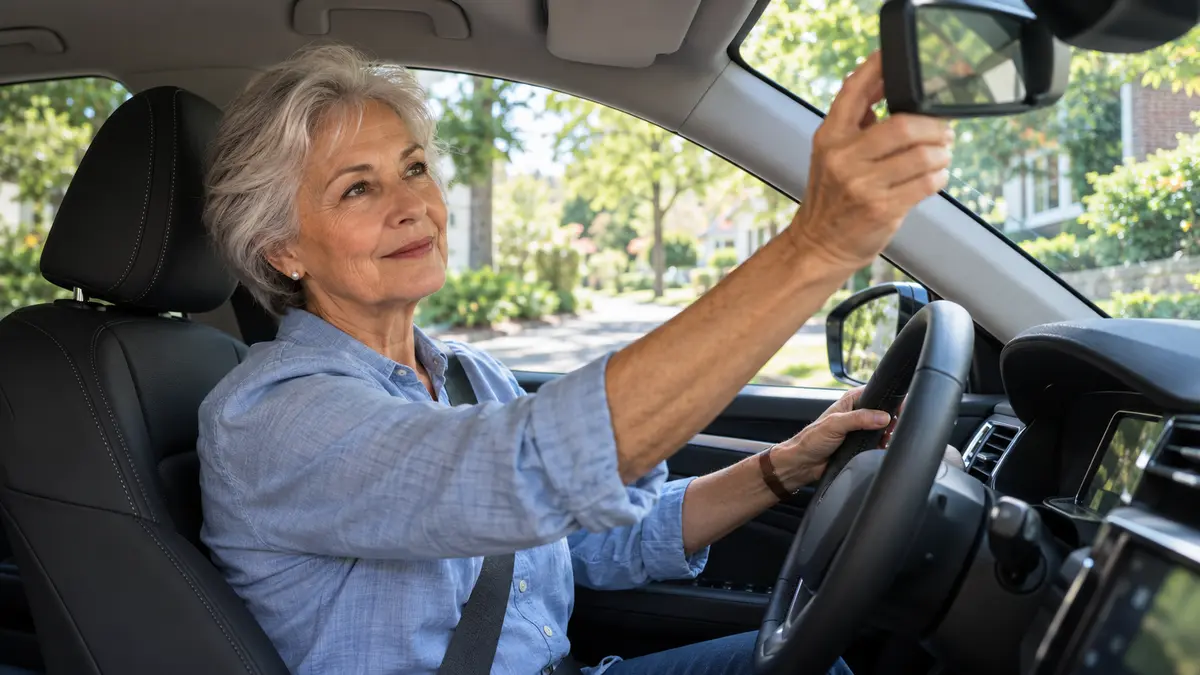
Driving can support independence, social connection, work, caregiving, and access to health care. Getting older does not automatically make someone unsafe behind the wheel, but changes in vision, hearing, movement, attention, health, or medicines can alter how demanding a familiar trip feels. A useful approach is to review function and real-world warning signs rather than relying on a birthday.
This guide offers a practical self-check for safe driving after 60. It explains what to notice, what adjustments may help, and when a professional assessment is more appropriate than self-testing. It is general education, not a licensing decision or individualized medical advice.
Start With Ability, Not Age
People age at different rates. Some drive safely well into later life, while a medical event, a new medicine, or a gradual sensory change can create problems earlier. The National Highway Traffic Safety Administration (NHTSA) emphasizes that driving decisions should not be based on age alone. The better questions concern how consistently a person can see hazards, process several streams of information, turn and reach controls, make sound judgments, and respond in time.
Safe mobility is not about keeping or surrendering the keys at any cost; it is about matching each trip and transportation choice to current abilities.
Practical note: A self-check works best when it is repeated after a health change, medication change, crash or near miss, and at regular intervals even when driving still feels comfortable.
| Area | What to notice | Useful next step |
|---|---|---|
| Vision | Glare, missed signs, difficulty with lane markings or night driving | Arrange an eye examination and avoid conditions that expose the problem |
| Movement | Trouble turning the head, steering, braking, or entering the car | Discuss pain or stiffness with a clinician and review vehicle fit |
| Attention | Feeling overloaded at intersections, getting lost, or reacting late | Use simpler routes and seek assessment if the change is new or persistent |
| Medicines | Drowsiness, dizziness, blurred vision, confusion, or slowed movement | Ask a pharmacist or prescriber for a complete medication review |
Check Vision, Hearing, and Physical Movement
Vision and glare
Driving depends on more than reading an eye chart. Peripheral awareness, contrast, depth judgment, and recovery from glare matter when spotting a pedestrian, judging a turn, or driving at dusk. NHTSA lists difficulty reading signs, seeing lane markings, and coping with oncoming headlights among changes worth noticing. Keep prescriptions current, clean the windshield and mirrors, and take recurring night-vision trouble seriously rather than simply trying harder.
Hearing and movement
Hearing supports awareness of horns, sirens, and unusual vehicle sounds. Strength and flexibility help a driver scan over a shoulder, turn the wheel, and move between pedals. Pain, numbness, swelling, or limited neck rotation may also affect control. These problems sometimes have treatable causes or practical accommodations, but the solution should be based on professional advice and real-world performance.
- Can you scan both directions at an intersection without pain or delay?
- Can you move smoothly between accelerator and brake?
- Can you see signs, lane edges, cyclists, and pedestrians in time?
- Can you hear important alerts while the windows are closed?
- Do glare, darkness, rain, or fatigue change the answer?
Review Every Medicine That May Affect Driving
Prescription drugs are only part of the picture. Over-the-counter cold or allergy products, sleep aids, cannabis or CBD products, supplements, and combinations can affect alertness or coordination. The U.S. Food and Drug Administration lists possible effects such as drowsiness, blurred vision, dizziness, fainting, slowed movement, and difficulty focusing. Some effects can continue into the next day.
Do not stop or change a prescribed medicine on your own. Instead, bring a complete list to a pharmacist or prescriber, including nonprescription products and supplements. Ask what each item may do alone and in combination, when impairment is most likely, and whether a new symptom could be related. The Centers for Disease Control and Prevention provides medication-list and action-plan tools designed to support this conversation.
Safety note: Do not drive when you feel drowsy, lightheaded, confused, faint, visually impaired, or unusually slow. Seek urgent medical help for sudden neurological symptoms, loss of consciousness, severe chest pain, or another emergency, and use emergency services rather than driving yourself.
| Medication moment | Question to ask | Safer action |
|---|---|---|
| Starting a new product | Could it affect attention, vision, balance, or reaction time? | Read warnings and ask when driving is considered safe |
| Changing a dose or schedule | Could the timing create morning or daytime impairment? | Clarify the plan with the prescriber or pharmacist |
| Combining products | Do any ingredients have overlapping sedating effects? | Review the complete list, including alcohol and supplements |
| Noticing a side effect | Is this symptom expected, temporary, or concerning? | Do not drive while impaired; contact a health professional |
Make the Vehicle Fit the Driver
A well-fitted vehicle can reduce unnecessary strain. The seat should allow a clear view while keeping comfortable access to the wheel and pedals. Mirrors should reduce blind areas, displays should be readable, and frequently used controls should not require awkward reaching. NHTSA notes that adaptations can range from a swivel seat or pedal extender to hand controls, but specialized equipment requires evaluation and training from qualified professionals.
Driver-assistance systems such as blind-spot alerts and automatic emergency braking may add useful information, but they do not replace scanning, judgment, or control. Learn what a system can and cannot do before relying on it. Keep sensors, cameras, mirrors, windows, lights, and tires maintained.
Adjust the Trip Before Giving Up the Destination
Risk is shaped by both the driver and the situation. A person may manage a familiar daytime route comfortably but struggle at night, in heavy rain, during rush hour, or at a complex unprotected left turn. Limiting the hardest conditions can preserve mobility while reducing demands.
- Choose daylight and good weather when visibility is a concern.
- Plan a familiar route with fewer high-speed merges and complex turns.
- Allow extra time so there is no pressure to hurry.
- Set navigation, temperature, and audio before moving.
- Leave more following distance and begin braking early.
- Use another transportation option when symptoms, fatigue, or conditions make the trip unsafe.
These adjustments are not proof that someone must stop driving. They are forms of self-regulation. However, an expanding list of avoided situations, increasing anxiety, or repeated problems can indicate that a more formal evaluation is needed.
Watch for Patterns, Not One Awkward Moment
Warning signs that deserve follow-up
A single wrong turn can happen to anyone. Patterns matter more: unexplained dents, repeated near misses, new trouble staying in a lane, delayed braking, confusion on familiar routes, frequent honking from others, tickets, pedal mistakes, or concern expressed by several passengers. NHTSA also advises paying attention when a clinician recommends restrictions or when familiar traffic situations become overwhelming.
| Pattern | Why it matters | Response |
|---|---|---|
| New dents or repeated near misses | May reveal missed objects or poor spacing | Pause, review circumstances, and arrange an objective assessment |
| Getting lost on familiar routes | May indicate attention, memory, or navigation difficulty | Discuss promptly with a clinician; avoid driving until evaluated if safety is uncertain |
| Pedal confusion or delayed braking | Creates immediate control risk | Stop driving and seek professional evaluation |
| Only driving in easier conditions | Can be a sensible adaptation or a sign of narrowing capacity | Track whether limits are stable or increasing |
Use an Objective Driving Assessment
Self-assessment has limits because gradual changes are easy to normalize. A driving rehabilitation specialist or occupational therapist trained in driving can review vision, cognition, movement, vehicle access, and on-road performance. This is different from asking a relative for a general opinion. A structured assessment can identify skills to practice, useful restrictions, vehicle adaptations, or evidence that driving should stop.
Training is not a guarantee against crashes. Research reviews suggest that certain programs, particularly those with individualized or on-road components, can improve some driving skills, while results vary by program and outcome. Treat a refresher course as one tool, not as proof of fitness to drive.
Plan Mobility Before a Crisis
A transportation plan is useful even for a capable driver. List essential trips, optional trips, available drivers, public transit, community shuttles, taxis or rideshare, delivery services, and the true monthly cost of owning a car. Try alternatives before they become necessary. Familiarity makes a temporary pause after surgery, an eye procedure, or a medication change much less disruptive.
Families can keep the discussion respectful by focusing on observable events and shared safety, not age or character. Use specific statements such as, “I noticed two close calls when turning left,” and pair concern with practical support. The goal is continued access to people and places, whether or not every trip is made behind the wheel.
A Monthly Five-Minute Self-Check
Set a recurring reminder and answer these questions honestly:
- Have I had a near miss, ticket, scrape, or unexpected honk?
- Has a passenger, clinician, or family member raised a specific concern?
- Do I have new trouble with glare, signs, hearing, turning, pedals, or fatigue?
- Have any medicines, doses, supplements, or health conditions changed?
- Am I avoiding more routes or conditions than I was last month?
- Is my backup transportation plan current and usable?
A new “yes” does not automatically end driving. It identifies something to investigate. Multiple warning signs, a serious event, or a sudden functional change should prompt a pause and professional guidance.
Bottom Line
Safe driving after 60 is an ongoing match between current abilities, the vehicle, and the trip. Review vision, hearing, movement, attention, health, and every medicine; reduce avoidable demands; and respond to patterns early. When there is doubt, an objective assessment is more useful than reassurance or argument. Planning other ways to travel protects independence by keeping everyday life accessible even when driving needs to change.