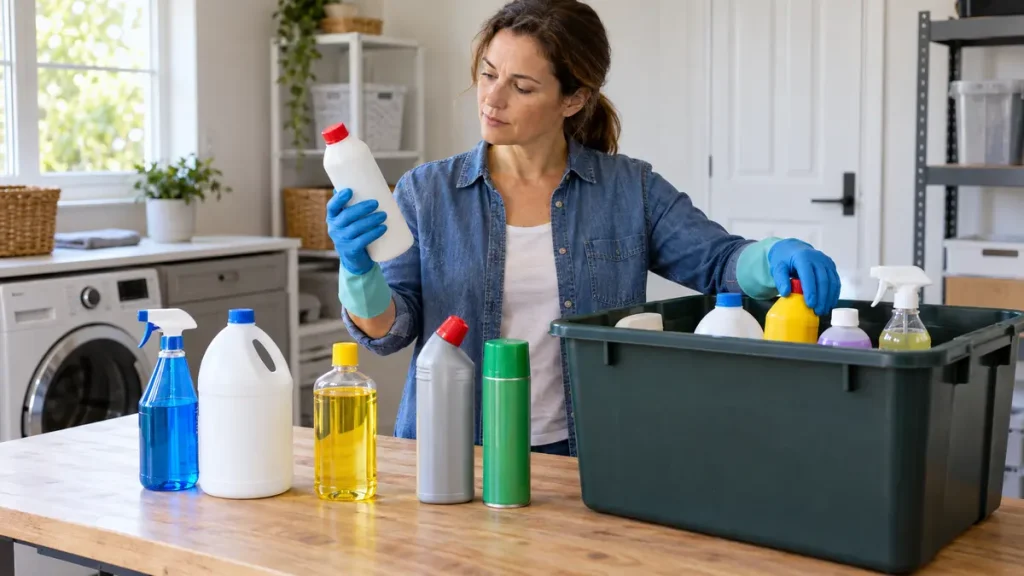
Cleaning products are supposed to make a home healthier, but the way they are chosen and used can affect indoor air, skin, eyes, and breathing comfort. The practical goal is not to make every home chemical-free. It is to clean well, disinfect only when it is useful, ventilate during higher-exposure tasks, and choose products with clearer safety signals when you can.
This guide focuses on everyday household decisions: how to read labels, when soap and water are enough, when disinfectants are appropriate, and how to reduce avoidable exposure to fumes, fragrances, sprays, and mixed chemicals. It is general education, not medical advice, and it is especially important to get individualized guidance if someone in the home has asthma, chronic lung disease, severe allergies, chemical sensitivities, is pregnant, or has symptoms that worsen during cleaning.
Why Cleaning Choices Affect Indoor Air
Indoor air is shaped by what people bring into the home and what they do there. The U.S. Environmental Protection Agency notes that volatile organic compounds, or VOCs, can come from household products including aerosol sprays, cleansers, disinfectants, air fresheners, and moth repellents. EPA also explains that some organic pollutants have been found at higher levels indoors than outdoors, and that exposure can rise during product use and remain elevated afterward.
That does not mean every cleaner is dangerous or that cleaning should be avoided. Dust, food residue, mold growth, and germs can also affect health. The more useful approach is to match the product to the job and avoid chemical intensity when a simpler method will work.
Evidence note: research linking cleaning exposures with respiratory symptoms is strongest for frequent or occupational exposure, sprays, disinfectants, bleach, ammonia, and mixed products. For ordinary household use, risk depends on the product, ventilation, frequency, health vulnerability, and whether label directions are followed.
Cleaning, Sanitizing, and Disinfecting Are Different Jobs
Many homes use disinfectants as all-purpose cleaners, but that can add exposure without adding much benefit for routine dirt. The CDC distinguishes routine cleaning from disinfecting and recommends disinfecting in situations such as when someone is sick or when a person at higher risk of infection needs extra protection. For many everyday surfaces, cleaning with soap or detergent removes dirt and many germs without requiring a stronger disinfectant.
Everyday Cleaning
Everyday cleaning removes visible soil, grease, dust, and many microbes from surfaces. It is the default choice for counters, tables, floors, shelves, and most low-risk surfaces. A cloth, water, and a mild detergent are often enough.
When Disinfecting Makes Sense
Disinfecting is most useful for high-touch surfaces when someone in the home is ill, after contact with body fluids, or when caring for a person with a weakened immune system. CDC guidance says to clean the surface first, then use an EPA-registered disinfecting product or an appropriate bleach solution, following the label.
| Household Situation | Usually Enough | When to Add Disinfecting |
|---|---|---|
| Kitchen counter after food prep | Soap or detergent and water, then dry | After raw meat handling or illness-related contamination |
| Bathroom sink used daily | Routine cleaner or mild detergent | During stomach illness, flu-like illness, or visible body-fluid contamination |
| Bedroom furniture and shelves | Damp dusting and occasional mild cleaner | Rarely needed unless contaminated |
| Doorknobs and shared remotes | Cleaning during normal weeks | More useful when someone is sick or high-risk |
What to Look For Before Buying a Cleaner
Labels are imperfect, but they still provide useful clues. A product with strong fragrance, aerosol delivery, corrosive warnings, or unclear ingredient disclosure may not be the best default for frequent use. The American Lung Association cautions that some cleaning supplies can release VOCs and other chemicals that irritate the eyes or throat, cause headaches, and contribute to respiratory problems, allergic reactions, or occupational asthma.
EPA’s Safer Choice program is one practical screen. It helps buyers find products that perform and contain ingredients reviewed as safer for human health and the environment. EPA also provides a searchable Safer Choice-certified product list, including a filter for fragrance-free products. This is not a medical guarantee, and EPA states that product mentions are not endorsements, but the label is more meaningful than vague marketing phrases such as “natural” or “green.”
| Label Signal | What It Can Mean | Practical Response |
|---|---|---|
| EPA Safer Choice | Ingredients reviewed against EPA safer-chemistry criteria | Useful starting point for routine cleaners |
| Fragrance-free | No added fragrance by that product standard or claim | Often preferable for asthma, migraine, or scent-sensitive households |
| Disinfectant or sanitizer | Designed to kill specific microbes when used correctly | Reserve for situations where germ-kill is needed |
| Danger, corrosive, or strong fumes | Higher hazard if misused or poorly ventilated | Use only when necessary and follow protective directions |
A Lower-Exposure Cleaning Routine
A safer routine begins before the bottle opens. Pick one product for the task, read the directions, remove children and pets from the immediate area when using stronger products, and open a window or turn on exhaust ventilation when the label recommends it or when the odor is noticeable. CDC guidance specifically recommends good ventilation when disinfecting indoors and says not to mix products or chemicals.
Ventilation Is Part of the Product Plan
Ventilation is not just a comfort step. EPA recommends increasing ventilation when using products that emit VOCs and meeting or exceeding label precautions. This may mean opening windows, using a fan that moves air outdoors, or cleaning in shorter sessions instead of spraying multiple rooms at once.
A practical routine can look like this:
- Remove loose dust or crumbs with a damp cloth or vacuum with appropriate filtration.
- Clean visible soil with water and a mild detergent before considering disinfection.
- Use the smallest number of products needed for the job.
- Choose liquid, wipe-on, or pump products over aerosols when they work for the task.
- Ventilate during and after cleaning, especially with disinfectants, bleach, sprays, or strong odors.
- Wash hands after cleaning and store products securely.
A sustainable cleaning routine is not the strongest possible chemical routine; it is the least complicated routine that reliably removes soil, uses disinfectants when they are truly useful, and keeps avoidable fumes out of the breathing zone.
Safer Swaps That Still Respect Hygiene
Reducing chemical exposure does not require giving up hygiene. It usually means using different defaults. Soap and water can handle many routine surfaces. A microfiber cloth can capture dust with less product. A paste of baking soda and water can scrub some nonporous surfaces. Vinegar can help with some mineral deposits and glass, although it should not be mixed with bleach and should not be used on surfaces that can be damaged by acid, such as some natural stone.
Safety note: homemade cleaners are not automatic disinfectants. If you need to kill germs for a specific illness situation, use an EPA-registered disinfectant as directed or follow CDC guidance for appropriate bleach use when bleach is suitable for the surface.
| Goal | Lower-Exposure Default | Important Limit |
|---|---|---|
| Routine dust removal | Damp microfiber cloth | Wash cloths regularly so dust and residue are not spread |
| Greasy kitchen surface | Mild dish soap or detergent in water | Rinse food-contact surfaces when needed |
| Glass or mirror smudges | Plain water, microfiber, or diluted vinegar if surface-safe | Never combine vinegar with bleach |
| Illness-related high-touch surfaces | Clean first, then EPA-registered disinfectant | Follow contact time, ventilation, and storage directions |
Special Caution for Asthma, Allergies, and Lung Conditions
People with asthma, chronic obstructive pulmonary disease, chemical sensitivities, or frequent wheezing may notice symptoms around sprays, fragrances, disinfectants, or bleach. The American Lung Association warns that some products can irritate the airways, and CDC notes that some cleaning and disinfection products can trigger asthma. A PubMed-indexed European Academy of Allergy and Clinical Immunology task force consensus statement also identifies cleaning sprays, bleach, ammonia, disinfectants, mixed products, and certain cleaning tasks as causes or triggers of work-related asthma.
For vulnerable households, the best default is prevention: fewer sprays, fewer scented products, better ventilation, clear labeling, and disinfectants used only for a defined reason. If symptoms are recurring, severe, or tied to work duties, professional medical and occupational-health guidance matters.
When to Get Professional Advice
Seek medical guidance if cleaning triggers wheezing, chest tightness, shortness of breath, eye or throat irritation that does not quickly resolve, dizziness, faintness, or asthma symptoms that require rescue medicine more often than usual. For severe breathing trouble, chest pain, confusion, fainting, or suspected poisoning, use urgent local medical or poison-control resources rather than trying to manage it with home remedies.
Storage, Mixing, and Child Safety
Some of the biggest household cleaning risks come from misuse rather than routine use. CDC advises people not to mix products or chemicals, not to breathe or ingest disinfecting products, and to store chemicals out of reach of children and pets. The American Lung Association gives a specific warning against mixing bleach or bleach-containing products with ammonia-containing cleaners because dangerous gases can result.
- Keep products in their original containers whenever possible.
- Do not reuse drink bottles or food containers for cleaning solutions.
- Label any diluted solution clearly and discard it according to the product directions.
- Keep products away from heat, direct sun, and food-preparation areas.
- Store stronger products in a locked or high cabinet if children, pets, or cognitively impaired adults are present.
Sustainable Choices Beyond the Bottle
Sustainable cleaning is not only about ingredient lists. It also includes buying fewer specialized products, using refill options when they are genuinely compatible with safety and hygiene, choosing durable cloths and brushes, and avoiding overuse. Buying a large collection of niche cleaners can increase cost, clutter, waste, and the chance that products expire or are mixed incorrectly.
It is also worth separating environmental claims from health claims. A refillable bottle may reduce packaging waste, but the concentrate still needs careful dilution and storage. A plant-derived ingredient can still irritate airways or skin. A fragrance may smell fresh while adding avoidable VOC exposure. The most reliable choice is usually the one that combines adequate cleaning performance, clear directions, lower hazard signals, and realistic use in your household.
Bottom Line
Safer cleaning is a set of small decisions: clean before disinfecting, ventilate when using stronger products, avoid sprays and fragrance when they are not needed, never mix chemicals, and use credible labels such as EPA Safer Choice as one screen for routine products. For most households, the healthiest cleaning routine is not extreme. It is consistent, simple, well-ventilated, and matched to the actual risk on the surface.
People with asthma, chronic lung disease, pregnancy, immune suppression, or recurring symptoms during cleaning should be more cautious and should ask a qualified clinician for personalized advice. General cleaning guidance cannot replace care that accounts for a person’s health history, exposures, and living situation.
Sources
- U.S. Environmental Protection Agency: Safer Choice
- U.S. Environmental Protection Agency: Search Products that Meet the Safer Choice Standard
- U.S. Environmental Protection Agency: Volatile Organic Compounds’ Impact on Indoor Air Quality
- Centers for Disease Control and Prevention: When and How to Clean and Disinfect Your Home
- American Lung Association: Cleaning Supplies and Household Chemicals
- PubMed: Asthma and exposure to cleaning products consensus statement