Frozen vegetables can make it easier to put vegetables on the table when time, budget, season, or spoilage gets in the way. Yet many shoppers still wonder whether a bag from the freezer is nutritionally inferior to fresh produce, whether the frost signals poor quality, and whether plain-looking vegetables are always the best choice. This guide explains what the evidence actually shows, how to compare packages, how to cook frozen vegetables without turning them watery, and when food-safety instructions matter.
Practical note: Frozen vegetables are not a consolation prize. Plain varieties can be a dependable way to add color, fiber, vitamins, minerals, and variety to everyday meals. The most useful comparison is not “fresh versus frozen” in the abstract; it is which option you will store safely, prepare well, and actually eat.
Why frozen vegetables deserve a place in the kitchen
Vegetables begin changing after harvest. Time, temperature, light, oxygen, cooking, and storage can all affect texture and some nutrients. Commercial frozen vegetables are generally harvested, washed, cut, briefly blanched, rapidly cooled, and frozen. Blanching helps slow enzyme activity that would otherwise damage color, flavor, and texture, while freezing greatly slows further change.
That process creates useful tradeoffs. Frozen vegetables may lose some heat-sensitive or water-soluble nutrients during blanching, but fresh vegetables can also lose nutrients during transport and several days in a refrigerator. Frozen vegetables are prewashed and cut, have a long usable life, and let a cook remove only what is needed. That can reduce the gap between intending to eat vegetables and having them ready at dinner.
- They are available year-round, including when a favorite vegetable is out of season.
- They can reduce preparation time because trimming and chopping are already done.
- They make portioning flexible and can reduce household food waste.
- They can add variety through single vegetables and unsauced blends.
- They work especially well in soups, curries, pasta dishes, omelets, grain bowls, and stir-fries.
The healthiest vegetable is not defined by the aisle it came from; it is the one that fits your needs, reaches your plate regularly, and is prepared in a way you enjoy.
What research says about frozen vegetables nutrition
Direct food-composition studies do not support the idea that fresh vegetables are always more nutritious. A two-year comparison of fresh, frozen, and “fresh-stored” produce measured vitamin C, beta-carotene, and folate in several fruits and vegetables. Most comparisons found no significant difference, and frozen produce outperformed produce stored in a refrigerator for five days more often than the reverse when a difference appeared. The details varied by food and nutrient, so the study does not mean freezing improves everything.
A separate study comparing minerals, fiber, and total phenolics in eight fruits and vegetables also found that results depended on the commodity, while most comparisons showed no significant difference between fresh and frozen. Together, these studies support a more accurate conclusion: frozen vegetables can be nutritionally comparable to fresh vegetables, but no single format wins for every nutrient, vegetable, storage period, or cooking method.
| Comparison factor | Fresh vegetables | Frozen vegetables | Useful takeaway |
|---|---|---|---|
| Time before eating | May spend days in transport, retail, and home storage | Frozen soon after processing and kept stable when continuously frozen | How long fresh produce sits matters |
| Processing | Usually unblanched | Often blanched before freezing | Blanching can reduce some sensitive nutrients but protects quality |
| Texture | Often crisp when raw | Usually softer after cooking because ice crystals affect cells | Choose the form that suits the dish |
| Waste | Can wilt or spoil before use | Easy to portion and return to the freezer | Lower waste can improve real-world vegetable intake |
How freezing, blanching, and cooking change nutrients
Blanching has benefits and costs
Most commercially frozen vegetables are briefly exposed to hot water or steam before freezing. This step deactivates enzymes that would continue degrading flavor, color, and texture. The University of Minnesota Extension notes that excessive blanching can soften vegetables and increase nutrient losses, while correct blanching helps preserve quality. Water blanching can move some vitamin C, folate, and other water-soluble compounds into the blanching water. Steam and shorter, properly timed exposure may reduce that loss for some foods.
Frozen storage slows change rather than stopping it
A freezer is a pause button, not a time machine. The U.S. Food and Drug Administration advises keeping a freezer at 0 degrees Fahrenheit (-18 degrees Celsius). Food held continuously at that temperature remains safe, although color, flavor, aroma, and texture can decline over long storage. A package covered in ice crystals may have experienced moisture loss or temperature fluctuation, which usually affects eating quality more than nutritional worth.
Cooking method still matters
Long boiling can move water-soluble nutrients into cooking water. Steaming, microwaving, roasting, or quickly sauteing often uses less water and can preserve texture. That does not make boiling “bad”: if the liquid becomes part of a soup or stew, nutrients and flavor that move into the broth are still in the meal. Cooking can also make certain plant compounds easier to access and makes many vegetables more pleasant to eat.
| Method | Best for | Texture strategy | Nutrient-minded approach |
|---|---|---|---|
| Microwave | Peas, corn, carrots, mixed vegetables | Use little water and stop when just tender | Short cooking time and minimal cooking liquid |
| Steam | Broccoli, green beans, cauliflower | Keep pieces above the water and avoid crowding | Limits direct contact with water |
| Roast | Broccoli, Brussels sprouts, cauliflower | Use a hot pan, space pieces apart, and allow moisture to escape | No cooking water to drain away |
| Saute | Spinach, pepper blends, peas, green beans | Cook uncovered in a wide pan | Fast cooking with modest added fat |
| Soup or stew | Nearly any unsauced blend | Add near the end when a firmer texture is wanted | Retains cooking liquid in the dish |
How to read the bag before buying
The front of a package shows a marketing name; the ingredients list and Nutrition Facts label show what is actually inside. A plain single-ingredient bag may list only broccoli, spinach, peas, or another vegetable. A seasoned blend may include salt, butter, cheese, sugar, oils, or thickeners. Those ingredients are not automatically unsuitable, but they change how the product fits the rest of a meal.
The FDA recommends using the label to compare sodium and notes that 5% of the Daily Value or less per serving is considered low, while 20% or more is considered high. The same agency specifically suggests fresh vegetables, plain frozen vegetables without sauce or seasoning, or low-sodium canned options for people trying to reduce sodium. Check the serving size as well: eating two labeled servings means consuming twice the listed sodium, calories, and other nutrients.
| Label detail | What to look for | Why it matters |
|---|---|---|
| Ingredients | A vegetable or simple blend near the start | Shows whether sauces, oils, salt, or sweeteners were added |
| Sodium | Compare equal serving sizes across brands | Seasoned and sauced versions can vary widely |
| Serving size | Compare it with the amount you typically eat | Package totals may differ from per-serving values |
| Cooking directions | Clear preparation instructions | Some frozen vegetables are intended to be cooked before eating |
| Package condition | Sealed bag without tears or a solid block of thawed-and-refrozen food | Supports quality and consistent storage |
Safety note: People following a clinician-directed sodium, potassium, carbohydrate, or texture-modified eating plan should use the package label and their individualized guidance. A general article cannot determine which vegetable blend or portion is appropriate for a particular medical condition.
Cook frozen vegetables without a watery result
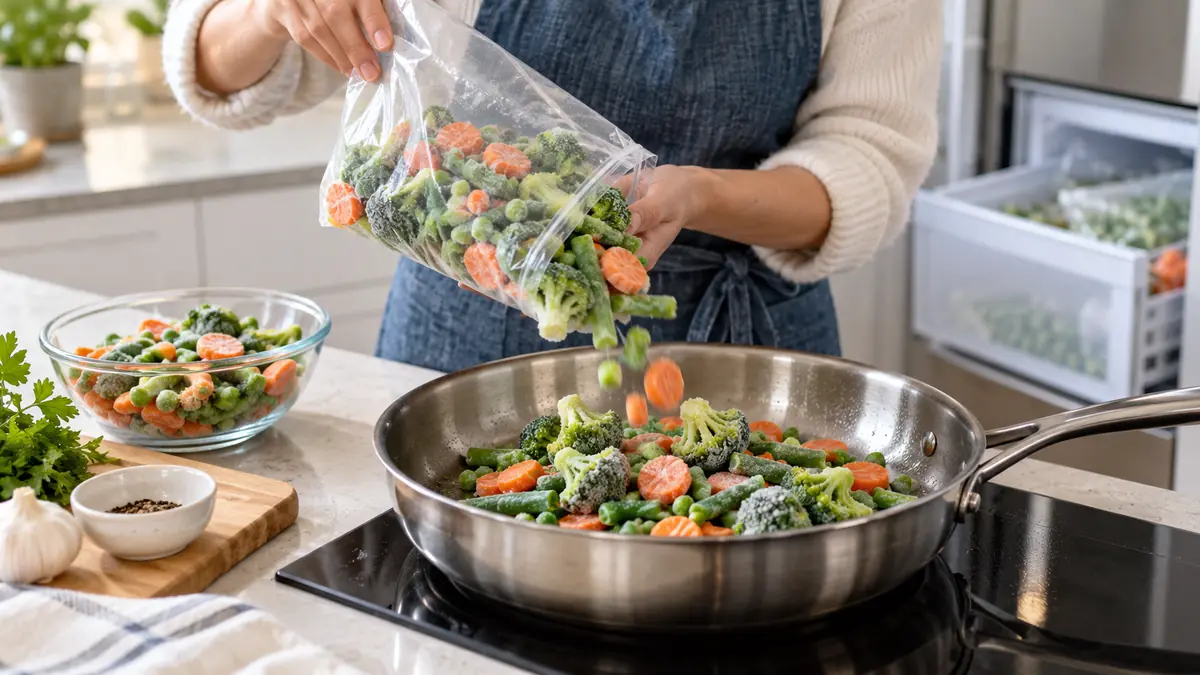
Frozen vegetables release moisture as their ice melts. Crowding a cool pan traps that moisture and steams the food unevenly. For roasting or sauteing, a broad hot surface and a single layer give water room to evaporate. Many vegetables can go straight from freezer to pan; thawing first can make them softer and is rarely necessary unless the recipe specifies it.
- Read the package directions and decide whether the vegetable needs full cooking.
- Measure only what you need and return the remainder to the freezer promptly.
- Preheat the oven, skillet, or steamer before adding the vegetables.
- Use a wide pan or arrange pieces in a single layer rather than piling them together.
- Cook until safely heated and pleasantly tender, checking early to avoid overcooking.
- Season after excess moisture has evaporated, using herbs, citrus, garlic, pepper, or a modest amount of sauce.
For a quick meal, pair the vegetable with a protein food and a fiber-rich carbohydrate. Examples include peas with eggs and whole-grain toast, broccoli with tofu and brown rice, spinach with beans and pasta, or a mixed vegetable blend stirred into lentil soup. The Centers for Disease Control and Prevention lists both fresh and frozen vegetables as practical options in a healthy eating pattern.
Food safety is different from freezer quality
Freezing slows microbial growth but does not reliably kill all harmful bacteria. The FDA advises following package cooking directions for commercially frozen foods. Do not assume every frozen vegetable is ready to eat just because it looks clean or because peas and corn appear in cold salads. If the package says “cook before eating,” follow those directions before adding the vegetables to a salad, salsa, smoothie, or other dish that will not receive further cooking.
Keep the freezer at 0 degrees Fahrenheit (-18 degrees Celsius), close bags securely, and avoid leaving vegetables at room temperature while preparing the rest of a meal. After a power interruption, use temperature and the presence of ice crystals rather than smell alone to judge whether frozen food remained cold enough. When in doubt, consult current food-safety guidance rather than tasting the food.
Pregnant people, adults over 65, young children, and people with weakened immune systems can face more serious consequences from foodborne illness. They should be particularly careful about products intended to be cooked. Anyone with symptoms of a serious foodborne illness or concerns about a high-risk exposure should contact an appropriate health professional or local health service.
A flexible freezer-to-meal framework
A useful freezer is organized around components rather than aspirational purchases. Keep two or three vegetables you enjoy and know how to use. A single vegetable offers flexibility; a plain blend adds variety without extra chopping. Rotate the oldest open bag toward the front and write the opening date on it if packages tend to linger.
Build flavor without depending on a heavy sauce
Start with aromatics such as garlic, ginger, scallions, or onion. Add acidity from lemon, lime, or vinegar after cooking. Spices, toasted seeds, chopped herbs, or a small amount of flavorful cheese can make vegetables satisfying without overwhelming them. A drizzle of oil can improve browning and help distribute flavor; the amount should fit the meal and the eater’s needs.
Match the vegetable to the job
Choose peas and corn for fast skillet meals; chopped spinach for soups, eggs, and pasta sauces; broccoli or cauliflower for roasting; and mixed vegetables for fried rice, pot pies, or curries. If texture matters, test one serving before committing the entire bag to a recipe. Brand, cut size, and thawing history can change cooking time.
When fresh, frozen, or canned makes the most sense
Fresh vegetables may be best for raw salads, crisp snacking, or a seasonal item with excellent flavor. Frozen vegetables often shine in cooked dishes, especially when speed and low waste matter. Canned vegetables can be the most shelf-stable choice and are useful when freezer space or reliable electricity is limited; choosing no-salt-added or lower-sodium versions can help manage sodium.
There is no nutritional requirement to choose only one format. A household might keep fresh lettuce and tomatoes for raw meals, frozen broccoli and spinach for weeknight cooking, and no-salt-added beans and corn for emergencies. Variety across vegetable types and colors is more useful than loyalty to a single preservation method.
Bottom line
Frozen vegetables are a nutritious, practical option, not a second-rate substitute for fresh produce. Research suggests that many measured nutrients are similar across fresh and frozen forms, while results differ by vegetable, nutrient, storage time, and preparation. Choose plain or lightly seasoned products when you want control over sodium and sauces, follow cooking directions for safety, and use methods that protect texture.
The best buying decision is the one that works in your actual kitchen. A bag of vegetables that becomes a quick stir-fry, soup, grain bowl, or side dish contributes more to a healthy routine than fresh produce that repeatedly spoils before it is eaten.
Sources
- Journal of Food Composition and Analysis: Selected nutrient analyses of fresh, fresh-stored, and frozen fruits and vegetables
- PubMed: Mineral, fiber, and total phenolic retention in refrigerated and frozen produce
- U.S. Food and Drug Administration: Sodium in Your Diet
- U.S. Food and Drug Administration: Are You Storing Food Safely?
- U.S. Food and Drug Administration: Selecting and Serving Produce Safely
- Centers for Disease Control and Prevention: Healthy Eating Tips
- University of Minnesota Extension: Blanching Vegetables