Plant foods can supply meaningful iron, but the amount listed for a food is not the same as the amount the body absorbs. That distinction matters for people who eat mostly or entirely plant-based diets, especially during life stages or health situations that raise iron needs. The good news is that a few ordinary meal-building choices can improve the usefulness of nonheme iron without turning every plate into a nutrition calculation.
This guide explains where plant-based iron comes from, how vitamin C and common meal components affect absorption, how to use labels, and when food strategies are not enough. It offers general education rather than a diagnosis or an individualized treatment plan.
Why plant-based iron needs a meal-level view
Iron helps the body make hemoglobin, the protein in red blood cells that carries oxygen, and myoglobin, which helps supply oxygen to muscle. Plant foods and iron-fortified foods contain nonheme iron. Meat, poultry, and seafood contain both heme and nonheme iron. Heme iron is generally more bioavailable, while nonheme iron is more responsive to the other foods and drinks present in the same meal.
The National Institutes of Health Office of Dietary Supplements notes that estimated iron bioavailability is lower in vegetarian diets than in mixed diets. Current U.S. reference guidance therefore sets iron requirements for vegetarians at 1.8 times the standard amount. That multiplier is a planning assumption, not a command to self-prescribe a supplement. Individual needs vary with age, menstruation, pregnancy, blood loss, medical conditions, medications, and measured iron status.
A useful plant-iron strategy is not “eat one perfect food.” It is to place a reliable iron source and a vitamin C-rich food in the same meal, repeat that pattern across the week, and use testing rather than guesswork when deficiency is possible.
Start with dependable sources of nonheme iron
Beans, lentils, peas, tofu, nuts, seeds, vegetables, and fortified grain products can all contribute. Fortified cereals and breads deserve attention because fortification can make them substantial sources, but serving size and iron content vary widely. A varied pattern also brings protein, fiber, folate, and other nutrients that a single “superfood” cannot provide.
| Iron source | Easy meal role | Vitamin C partner |
|---|---|---|
| Lentils or beans | Soup, chili, grain bowl, or taco filling | Tomatoes, bell pepper, cabbage slaw, or citrus |
| Tofu or tempeh | Stir-fry, curry, sandwich, or sheet-pan meal | Broccoli, peppers, kiwi, or a lime-based sauce |
| Pumpkin seeds or tahini | Oatmeal topping, snack mix, dressing, or spread | Berries, orange segments, or chopped tomato |
| Iron-fortified cereal | Breakfast or dry snack | Strawberries, kiwi, or another vitamin C-rich fruit |
Practical note: food composition varies by brand, variety, preparation, and serving. Check the Nutrition Facts label on packaged foods rather than assuming every cereal, bread, or meat substitute contains the same amount.
Pair iron with vitamin C at the same meal
Vitamin C can enhance nonheme iron absorption. It helps keep iron in a chemical form that is easier to take up in the intestine and can counter some inhibitory effects within a meal. The pairing does not need to be exotic: beans with tomato salsa, tofu with broccoli, lentil soup with lemon, or fortified cereal with berries all put the two elements together.
A 2026 systematic review and meta-analysis of controlled interventions found that including ascorbate-rich fruit or juice with meals probably improved some iron-status measures, including serum ferritin and hemoglobin, while results differed across other outcomes. That is a useful but measured conclusion. It supports a food-pairing habit; it does not prove that fruit alone will correct iron deficiency or replace evaluation of ongoing blood loss, malabsorption, or another cause.
Think in pairings, not isolated nutrients
| If the meal contains | Add or keep | Simple example |
|---|---|---|
| Beans or lentils | A vitamin C-rich vegetable or fruit | Black bean bowl with peppers and lime |
| Tofu or edamame | Broccoli, cabbage, or citrus | Tofu-broccoli stir-fry with orange segments |
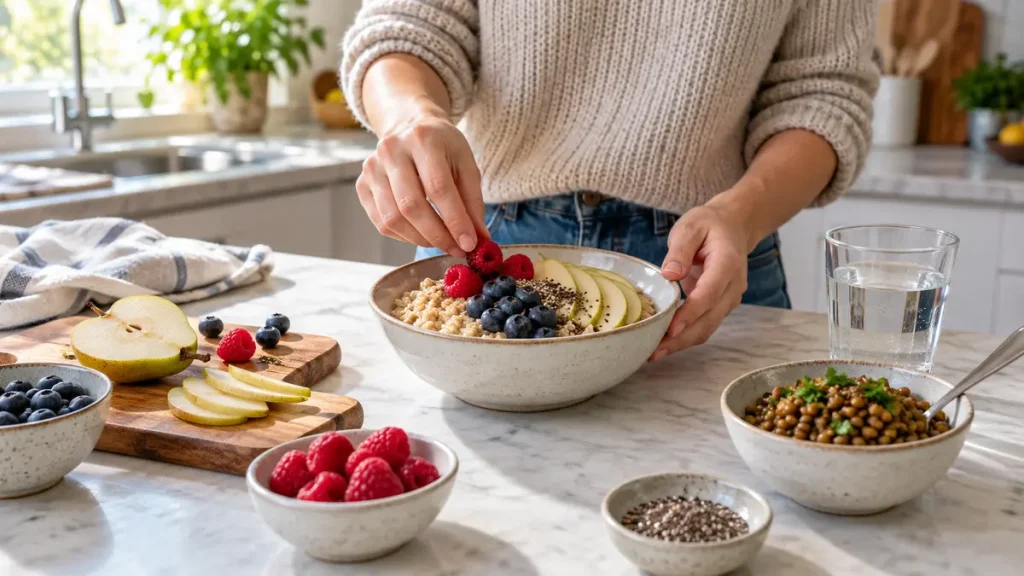
| Whole grains and seeds | Berries, kiwi, or tomato | Oats with pumpkin seeds and strawberries |
| Fortified cereal or bread | Fresh fruit or vegetables | Fortified cereal with berries |
Fresh, frozen, and cooked foods can all work
Vitamin C is sensitive to prolonged heat and storage, but a useful meal does not require raw produce at every sitting. Fresh fruit, lightly cooked vegetables, frozen produce, and tomato-based dishes can all contribute. Choose forms that are affordable, available, and likely to be eaten consistently.
Understand inhibitors without fearing healthy foods
Phytate in grains, legumes, nuts, and seeds can reduce nonheme iron absorption within a meal. Polyphenols in tea and coffee can also interfere, and calcium may affect iron bioavailability under some conditions. Yet many foods containing these compounds are nutritious. The aim is not to strip fiber-rich staples from the diet; it is to use a few timing and preparation choices when iron adequacy is a concern.
The NIH emphasizes that the effects of enhancers and inhibitors are often attenuated across a typical mixed diet. Iron status, total dietary pattern, and repeated intake matter more than any single bite. People with adequate iron stores generally do not need to micromanage every cup of tea or calcium-containing food.
- Include vitamin C with meals centered on legumes, tofu, whole grains, seeds, or fortified foods.
- If iron status is low, consider having tea or coffee between meals rather than with the most iron-focused meal.
- Use soaking, sprouting, or fermentation when they fit the food and recipe, but do not treat them as guaranteed fixes.
- Keep calcium-rich foods in the overall diet unless a clinician gives different advice; timing adjustments should not create another nutrient gap.
Use food preparation as a supporting tool
Soaking, sprouting, and fermentation
These processes can reduce phytate in some foods, but the size of the effect depends on the food, method, time, and cooking process. They can be useful culinary techniques, not a promise of a specific absorption increase. Rinse and cook legumes safely, refrigerate soaked foods when appropriate, and follow reliable food-safety instructions.
Cast-iron cookware
Cooking acidic or moist foods in cast iron can add some iron to food, with the amount varying by the pan, recipe, acidity, moisture, and cooking time. It may be a small supporting contribution, but it is too variable to serve as a treatment strategy. People with iron-overload disorders should ask their clinician whether this practice is appropriate.
| Technique | Potential role | Important limit |
|---|---|---|
| Pairing with vitamin C | Enhances nonheme iron availability within the meal | Does not diagnose or treat the cause of low iron |
| Soaking, sprouting, or fermenting | May lower phytate in some foods | Effects vary by food and method |
| Separating tea or coffee | May reduce mealtime polyphenol interference | Usually most relevant when iron status or intake is a concern |
| Using cast-iron cookware | Can add variable amounts of iron to certain foods | Not precise enough to replace an iron plan or clinical care |
Read labels without confusing Daily Value and personal need
On U.S. Nutrition Facts labels, iron is listed in milligrams and as a percent Daily Value. The FDA sets the Daily Value for iron at 18 mg for adults and children age four and older. As a general label-reading guide, 5% Daily Value or less per serving is considered low and 20% or more is considered high.
The Daily Value is a labeling reference, not a personal prescription. For example, NIH reference intakes differ by age, sex, pregnancy, lactation, and dietary pattern. Also check the serving size: eating half the labeled serving provides roughly half the listed iron, while two servings provide roughly twice the amount.
- Find the serving size and decide how much you actually eat.
- Check iron in milligrams and percent Daily Value.
- Compare similar products, especially cereals, breads, and plant-based alternatives.
- Add a vitamin C-rich food when the product anchors an iron-focused meal.
- Look at the whole label, including sodium, added sugars, fiber, and other nutrients.
Build a repeatable one-day pattern
Consistency is more useful than an occasional oversized “iron meal.” A workable day might include fortified cereal with strawberries at breakfast, a lentil and tomato soup at lunch, pumpkin seeds with fruit as a snack, and tofu with broccoli and peppers at dinner. Another day can use beans, tahini, whole grains, leafy greens, and different fruits or vegetables.
Start by improving one meal you already eat. Add peppers to a bean bowl, fruit to fortified cereal, tomatoes to a chickpea sandwich, or lemon to lentil soup. Once that pairing feels automatic, improve a second meal. This approach spreads iron sources across the day and avoids making eating needlessly rigid.
Know who may need more than meal planning
People who menstruate heavily, are pregnant or recently postpartum, donate blood often, follow restrictive diets, have gastrointestinal conditions, take medicines that affect absorption, or have ongoing blood loss may be at higher risk of inadequate iron. Infants and young children also have specific needs that should be addressed with pediatric guidance.
Fatigue, weakness, dizziness, headaches, shortness of breath, reduced exercise tolerance, restless legs, or unusual cravings can have many causes. They are not specific enough to diagnose iron deficiency at home. The National Heart, Lung, and Blood Institute explains that evaluation can include a complete blood count, hemoglobin, iron measures, and ferritin. Clinicians interpret results in context because inflammation and other conditions can affect some markers.
Safety note: do not start high-dose iron because of symptoms alone. Iron supplements can cause adverse effects, interact with medicines, and be dangerous in overdose, especially for children. Confirm the need and an appropriate plan with a qualified healthcare professional. Seek prompt medical care for severe shortness of breath, chest pain, fainting, signs of significant bleeding, or rapidly worsening symptoms.
A practical weekly checklist
A low-friction checklist can show whether the basic pattern is present without tracking every milligram:
- Keep at least two convenient iron-rich staples available, such as canned beans, lentils, tofu, seeds, or a fortified cereal.
- Stock two vitamin C partners that fit those staples, such as peppers, tomatoes, broccoli, citrus, kiwi, or berries.
- Check labels on fortified foods and note the real serving size.
- Use variety across the week rather than relying on one food.
- When iron status is known to be low, discuss drink timing, supplements, medications, and follow-up testing with a clinician.
Bottom line
Plant-based iron is practical when meals are designed around absorption as well as content. Choose dependable sources such as legumes, tofu, seeds, vegetables, and fortified grains; pair them with vitamin C-rich foods; and use labels to compare packaged options. Treat tea, coffee, phytate, calcium, and preparation methods as context rather than reasons to fear nutritious foods.
Most importantly, food planning and medical assessment solve different problems. A stronger meal pattern can support adequate intake, but persistent symptoms, higher-risk life stages, blood loss, or abnormal test results deserve individualized evaluation.
Sources
- NIH Office of Dietary Supplements: Iron Fact Sheet for Health Professionals
- MedlinePlus: Iron in diet
- U.S. Food and Drug Administration: Daily Value and Percent Daily Value reference guide
- National Heart, Lung, and Blood Institute: Iron-deficiency anemia
- PubMed: 2026 systematic review and meta-analysis of ascorbate-rich fruits and iron bioavailability