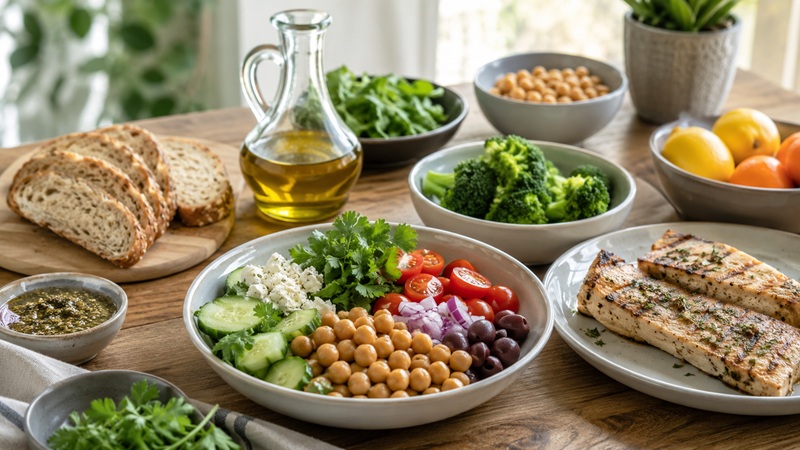
Mediterranean-style eating is often described as a diet, but it works better as a flexible pattern: more vegetables, fruit, beans, lentils, whole grains, nuts, seeds, fish or other lean proteins, and unsaturated fats such as olive oil; less routine reliance on highly processed foods, sugary drinks, refined grains, and processed meats. That makes it useful for people who want a healthier plate without turning meals into a strict set of rules.
This guide explains how to build a Mediterranean-style plate in a practical, evidence-aware way. It is not a prescription for weight loss, diabetes treatment, heart disease treatment, or any other medical condition. People who are pregnant, managing kidney disease, diabetes, an eating disorder, food allergies, digestive disease, or medication-related nutrition restrictions should use this information as a starting point for a conversation with a qualified clinician or registered dietitian.
A Mediterranean-style plate is not about copying one region perfectly. It is about building repeatable meals around whole foods, plant-forward variety, satisfying protein, healthy fats, and enough flexibility to fit real life.
What Mediterranean-Style Eating Means
The American Heart Association describes the Mediterranean diet as a broad term based on traditional eating habits in countries around the Mediterranean Sea, not one single standardized menu. Common features include plenty of fruits, vegetables, grains, potatoes, beans, nuts, and seeds; olive oil as a primary fat source; and low to moderate amounts of dairy, eggs, fish, and poultry. Fish and poultry are typically eaten more often than red meat, and meals center on minimally processed, plant-based foods.
That pattern overlaps with general heart-healthy guidance: a wide variety of vegetables and fruits, mostly whole grains, healthy protein sources such as beans, peas, lentils, nuts, fish, seafood, low-fat or fat-free dairy, and lean poultry, and unsaturated fats in place of saturated fats. Evidence note: the strongest message is the overall pattern, not a single superfood or one perfect ingredient.
| Food group | Mediterranean-style emphasis | Practical examples |
|---|---|---|
| Vegetables and fruit | Frequent, varied, and colorful | Leafy greens, tomatoes, peppers, citrus, berries, apples |
| Beans and lentils | Regular plant protein and fiber | Chickpeas, lentil soup, white beans, black beans |
| Whole grains | Mostly intact or minimally refined grains | Oats, barley, brown rice, whole-grain bread, bulgur |
| Fats | Mostly unsaturated sources | Olive oil, nuts, seeds, avocado, fatty fish |
| Animal proteins | Fish and poultry more often than red or processed meat | Salmon, sardines, trout, chicken, eggs, yogurt |
Why The Pattern Gets So Much Attention
Mediterranean-style eating is studied because it bundles several behaviors already linked with cardiometabolic health: more fiber-rich plant foods, more unsaturated fats, more seafood in appropriate amounts, and fewer highly processed foods. Public health guidance does not frame it as a cure, and neither should a wellness article. The most careful interpretation is that it is one evidence-supported healthy eating pattern that can fit many people.
The 2025-2030 Dietary Guidelines for Americans emphasize whole, nutrient-dense foods such as protein foods, dairy, vegetables, fruits, healthy fats, and whole grains, while reducing highly processed foods, refined carbohydrates, excess sodium, added sugars, and unhealthy fats. The National Institute of Diabetes and Digestive and Kidney Diseases also notes that recent diabetes standards discuss food-based eating styles that incorporate healthy fats and Mediterranean-style patterns. Those are broad population and clinical-care signals, not personalized instructions.
Evidence Strength In Plain Language
Nutrition research is rarely as simple as “food A causes outcome B.” People eat meals, not isolated nutrients, and long-term patterns are hard to test perfectly. Still, the convergence of dietary guidelines, heart-health recommendations, and clinical nutrition guidance makes Mediterranean-style eating a reasonable, low-drama pattern for many adults.
| Claim type | Reasonable wording | Wording to avoid |
|---|---|---|
| Heart health | May support a heart-healthy dietary pattern | Prevents heart disease for everyone |
| Blood sugar | Can fit diabetes nutrition care when individualized | Treats diabetes without medication |
| Weight | May help some people improve diet quality and satiety | Guarantees weight loss |
| Aging | Can support nutrient adequacy and healthy routines | Reverses aging |
Start With The Plate, Not A Long Shopping List
A simple Mediterranean-style plate has four working parts: half the plate from vegetables and fruit, a quarter from protein, a quarter from a whole grain or starchy vegetable, and a small amount of unsaturated fat. This is a flexible visual tool, not a medical meal plan. Portions may need adjustment for appetite, activity, diabetes management, kidney disease, weight goals, pregnancy, or medications.
The Four-Part Plate
- Choose two vegetables or one vegetable plus one fruit.
- Add a protein such as beans, lentils, fish, poultry, eggs, yogurt, tofu, or nuts.
- Add a fiber-rich carbohydrate such as oats, barley, brown rice, potatoes, whole-grain bread, or whole-grain pasta.
- Use a modest amount of olive oil, nuts, seeds, avocado, or another unsaturated fat for flavor and satisfaction.
Practical note: a Mediterranean-style meal does not need to be expensive. Canned beans, frozen vegetables, oats, seasonal fruit, canned fish, bulk lentils, and store-brand olive oil can all work.
Build Meals Around Foods You Already Eat
The easiest version is often a swap, not a full reset. A sandwich can become whole-grain bread with hummus, vegetables, and tuna or roasted chicken. Pasta can keep its familiar role while adding beans, greens, tomatoes, olive oil, and a smaller amount of cheese. Breakfast can shift from sweet refined cereal to oats with yogurt, nuts, and fruit.
| Usual meal | Mediterranean-style adjustment | Why it helps |
|---|---|---|
| Toast with butter and jam | Whole-grain toast with nut butter and fruit | Adds fiber, protein, and unsaturated fat |
| White pasta with creamy sauce | Whole-grain pasta with olive oil, tomatoes, greens, and beans | Improves fiber and plant-food variety |
| Processed-meat sandwich | Hummus, vegetables, and grilled chicken or tuna on whole-grain bread | Reduces processed meat and adds vegetables |
| Chips as a snack | Greek yogurt, fruit, nuts, or vegetables with bean dip | Adds nutrients and satiety |
| Red meat most nights | Alternate with fish, lentils, beans, tofu, eggs, or poultry | Creates protein variety and lowers routine processed-meat reliance |
Protein: Think Variety Before Perfection
Mediterranean-style eating is not automatically vegetarian, but it is usually plant-forward. Beans, lentils, chickpeas, nuts, seeds, tofu, fish, seafood, eggs, yogurt, and poultry can all contribute protein. The American Heart Association recommends shifting from meat to plant sources such as beans, peas, lentils, and nuts, regularly consuming fish and seafood, choosing low-fat or fat-free dairy, and selecting lean, minimally processed meats when meat is eaten.
People with kidney disease, advanced liver disease, certain metabolic conditions, or prescribed protein targets should not follow generic high-protein advice. A clinician or renal dietitian may need to set specific limits.
Easy Protein Anchors
- Beans or lentils in soup, grain bowls, tacos, pasta, or salad.
- Plain yogurt or cottage cheese with fruit, oats, or nuts.
- Eggs with vegetables and whole-grain toast.
- Fish such as salmon, sardines, trout, anchovies, or tuna chosen with mercury guidance in mind.
- Tofu or tempeh with vegetables, herbs, and olive oil-based sauces.
Fish Is Helpful, But Mercury Guidance Matters
Fish can be part of a healthy pattern because it provides protein and nutrients such as omega-3 fats, vitamin B12, vitamin D, selenium, iodine, and choline, depending on the type. EPA and FDA advice recommends 2 to 3 servings a week from lower-mercury “Best Choices” or 1 serving from “Good Choices” for people who might become pregnant, are pregnant, are breastfeeding, and for children. The same advice notes that adults are generally advised to eat at least 8 ounces of seafood per week, with lower amounts for children.
This does not mean every person must eat fish. People who avoid seafood can still build a Mediterranean-style pattern with beans, lentils, nuts, seeds, tofu, vegetables, fruit, whole grains, and appropriate fortified foods. People who are pregnant or breastfeeding, feeding children, or eating locally caught fish should follow current EPA/FDA fish advisories.
| Situation | Safer next step | Reason |
|---|---|---|
| Pregnancy or breastfeeding | Use EPA/FDA lower-mercury fish guidance | Mercury exposure is a special concern for fetal and child development |
| Children eating fish | Use child-specific serving sizes and lower-mercury choices | Children need smaller portions than adults |
| Locally caught fish | Check local fish advisories before eating | Mercury and other contaminants vary by waterway |
| No seafood preference | Use legumes, soy foods, nuts, seeds, and clinician-guided supplements if needed | The pattern can remain plant-forward without seafood |
Do Not Forget Calcium, Vitamin D, And Personal Needs
Some Mediterranean-style templates use less dairy than a typical U.S.-style pattern. That can be fine, but calcium and vitamin D still matter. The NIH Office of Dietary Supplements explains that calcium helps build and maintain bones and supports muscle, nerve, blood vessel, and hormonal functions. Calcium can come from milk, yogurt, cheese, canned sardines or salmon with bones, some vegetables such as kale and bok choy, fortified plant milks, calcium-set tofu, and fortified cereals.
If you reduce dairy, check whether you are replacing its nutrients, not just removing it. This is especially important for teens, adults over 50, postmenopausal women, people who avoid dairy, people with eating disorders, and anyone at risk for low bone density. Supplements are not automatically better than food, and they can interact with medications or be inappropriate in certain medical situations.
Make The Pattern Work On A Budget
A Mediterranean-style plate can be built from everyday ingredients. The trick is to choose a few low-cost anchors and repeat them in different ways. Canned beans can become soup, salad, tacos, or pasta. Frozen spinach can go into eggs, lentils, grain bowls, or stew. Oats can be breakfast, snack bars, or a binder for savory patties. Canned fish can become toast, salads, or rice bowls.
Low-Cost Staples
- Dry or canned beans, lentils, and chickpeas.
- Oats, brown rice, barley, potatoes, and whole-grain bread.
- Frozen vegetables and seasonal fruit.
- Eggs, plain yogurt, tofu, canned salmon, sardines, or tuna.
- Olive oil used in modest amounts for cooking and dressing.
Budget-friendly eating also means reducing food waste. Plan two meals around the same ingredient: lentils for soup one night and a lentil salad the next day; roasted vegetables for dinner and an egg scramble the next morning.
A Three-Day Starter Plan
Use this as an example of structure, not a personalized nutrition plan. Adjust portions, ingredients, sodium, carbohydrate amounts, texture, allergens, and protein choices to your needs.
| Day | Breakfast | Lunch | Dinner |
|---|---|---|---|
| 1 | Oats with yogurt, berries, and walnuts | Chickpea salad with whole-grain pita | Salmon or tofu with vegetables and brown rice |
| 2 | Eggs with spinach and whole-grain toast | Lentil soup with fruit | Whole-grain pasta with tomatoes, greens, beans, and olive oil |
| 3 | Plain yogurt with fruit and seeds | Bean and vegetable grain bowl | Chicken or tempeh with roasted vegetables and potatoes |
When To Personalize With A Professional
General nutrition guidance has limits. A Mediterranean-style pattern may need medical tailoring if you have diabetes and count carbohydrates, kidney disease and monitor potassium or phosphorus, heart failure and follow sodium or fluid guidance, celiac disease, inflammatory bowel disease, food allergies, pregnancy-related needs, or a history of an eating disorder. Medication interactions can also matter, especially with blood thinners, blood pressure medicines, diabetes medicines, and supplements.
Seek individualized advice if a new eating pattern causes unintended weight loss, persistent digestive symptoms, dizziness, worsening blood sugar patterns, swelling, severe fatigue, or anxiety around food. Nutrition should support daily life, not make it smaller or more stressful.
Common Mistakes To Avoid
The first mistake is treating olive oil, nuts, wine, or red wine headlines as the whole diet. Olive oil and nuts can be useful, but they are energy-dense, and the broader pattern matters more than adding one ingredient. Alcohol is optional, and people who do not drink should not start for health reasons.
The second mistake is assuming “Mediterranean” means expensive imported foods. The pattern can fit many cuisines: beans and rice, lentil dal, vegetable stews, fish tacos with cabbage, tofu bowls, whole-grain flatbreads, and seasonal produce can all reflect the same underlying principles.
The third mistake is making the change too strict. A sustainable pattern leaves room for culture, family meals, budget, appetite, and enjoyment.
Bottom Line
Mediterranean-style eating is a flexible, evidence-supported way to build healthier meals around vegetables, fruit, beans, lentils, whole grains, nuts, seeds, seafood or other proteins, and unsaturated fats. It is best understood as an overall pattern that can support heart-healthy and diabetes-aware nutrition conversations, not as a cure or guarantee.
Start with one meal you already eat, then add one plant food, choose a satisfying protein, swap toward a whole grain when possible, and use unsaturated fats for flavor. Keep the pattern personal, affordable, and medically appropriate for your situation.
Sources
- American Heart Association: What Is the Mediterranean Diet?
- American Heart Association: Diet and Lifestyle Recommendations
- Dietary Guidelines for Americans, 2025-2030
- NIDDK: What’s New in the 2024 ADA Standards of Care?
- EPA and FDA: Advice About Eating Fish and Shellfish
- NIH Office of Dietary Supplements: Calcium Fact Sheet for Consumers