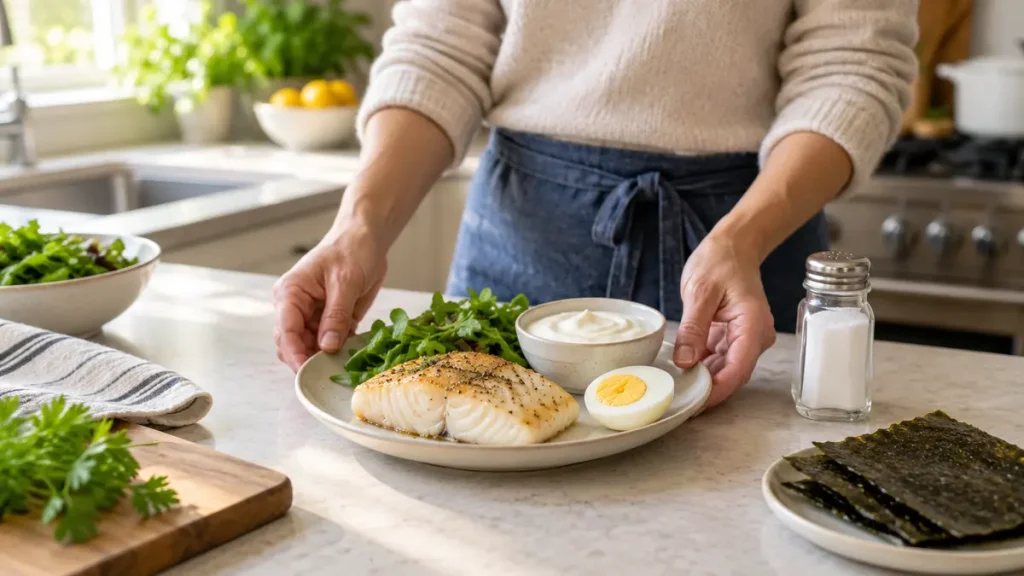
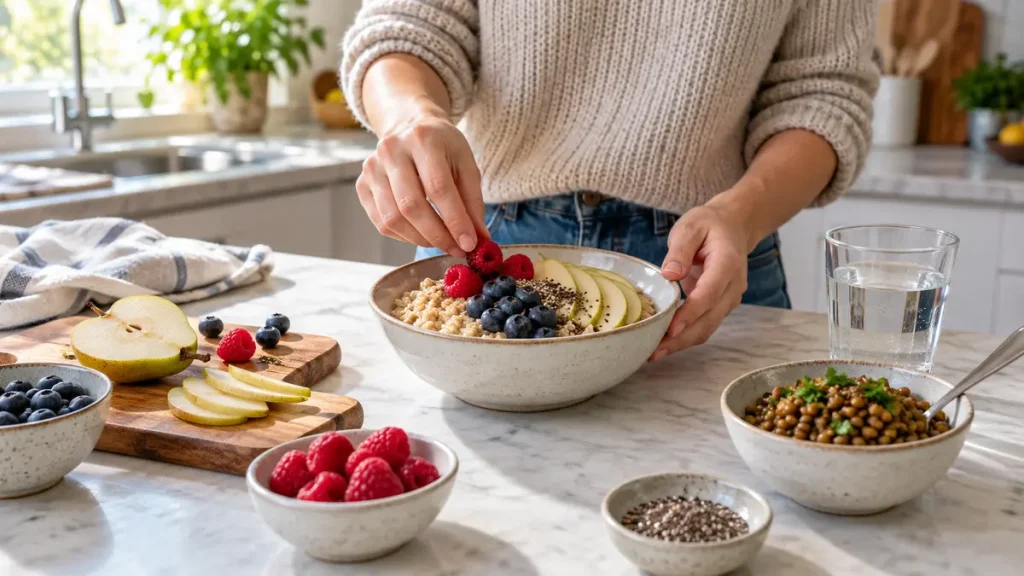
Potassium is often reduced to a single food recommendation: eat a banana. That shorthand misses the larger and more useful picture. Potassium is found across vegetables, fruit, beans, dairy foods, fish, and other everyday staples, so most people can build a potassium-rich pattern without chasing one “superfood” or buying a supplement. This guide explains what potassium does, how intake targets and food labels differ, which food groups can help, and how to make gradual changes while keeping important kidney and medication safety cautions in view.
A potassium-rich eating pattern is built through variety: several ordinary foods across the day matter more than one celebrated ingredient.
Why Potassium Matters
Potassium is an essential mineral and electrolyte. It helps maintain fluid balance inside cells and supports normal nerve signaling, muscle contraction, and kidney function. The kidneys usually regulate how much potassium remains in the blood by adjusting how much is excreted in urine.
Potassium and sodium are related but not interchangeable. A diet that supplies potassium-rich foods while limiting excess sodium is part of several heart-healthy eating patterns. Research behind the Dietary Approaches to Stop Hypertension, or DASH, pattern found lower blood pressure with an eating plan emphasizing fruits, vegetables, low-fat dairy, whole grains, fish, poultry, nuts, and legumes. The result reflects the whole dietary pattern, not potassium acting alone.
Evidence note: Higher potassium intake can support blood pressure management for many otherwise healthy adults, but it does not replace prescribed medicine or individualized care.
Intake Numbers: AI Versus Daily Value
Two different numbers commonly appear in potassium discussions. The National Academies established an Adequate Intake, or AI, of 3,400 milligrams per day for adult men and 2,600 milligrams per day for adult women. The AI is a population reference level for apparently healthy people; it is not a precise requirement for every individual.
The U.S. Food and Drug Administration uses a potassium Daily Value of 4,700 milligrams on Nutrition Facts labels. That standardized label number helps shoppers compare products. It is not a diagnosis, a prescription, or proof that everyone should force their intake to exactly 4,700 milligrams.
| Reference | What it means | How to use it |
|---|---|---|
| Adequate Intake (AI) | A population intake level judged adequate when evidence is insufficient for a Recommended Dietary Allowance | Use as general context for healthy people, not as an individual prescription |
| Daily Value (DV) | A standardized label reference; the potassium DV is 4,700 mg | Use %DV to compare packaged foods serving by serving |
| Personal potassium goal | An individualized target based on health, laboratory results, and medicines | Ask a clinician or registered dietitian when kidney, heart, endocrine, or medication concerns apply |
How to Read Percent Daily Value
The FDA’s general label guide treats 5% DV or less per serving as low and 20% DV or more as high. Always check the serving size first. If you eat two labeled servings, you get roughly twice the listed potassium as well as twice the listed sodium, calories, and other nutrients. Labels are especially useful when comparing yogurt, beans, soups, tomato products, and other packaged foods whose recipes vary.
Potassium-Rich Foods Beyond Bananas
Bananas contain potassium, but they are only one option. Potatoes and sweet potatoes, beans and lentils, leafy greens, squash, tomatoes, avocado, oranges, melon, dried fruit, milk, yogurt, fish, and some meats can all contribute. A varied approach also supplies fiber, protein, calcium, and other nutrients that a potassium pill does not reproduce.
| Food group | Everyday examples | Practical use |
|---|---|---|
| Vegetables | Potato, sweet potato, spinach, tomato, winter squash | Add one at lunch and one at dinner; keep edible skins when appropriate |
| Fruit | Banana, orange, cantaloupe, kiwi, apricot | Choose whole fruit for snacks or add it to breakfast |
| Legumes | White beans, lentils, lima beans, soybeans | Stir into soups, salads, grain bowls, or tacos |
| Dairy or fortified alternatives | Plain yogurt, milk, kefir | Pair with fruit or use in a savory sauce; compare labels on alternatives |
| Fish and other proteins | Salmon, trout, tuna, clams, chicken | Use as one part of a balanced plate rather than the sole potassium source |
Fresh, Frozen, Canned, and Dried All Count
Fresh produce is not the only useful choice. Plain frozen vegetables and fruit can be convenient and minimize waste. No-salt-added canned beans and vegetables can save time; draining and rinsing can reduce sodium. Dried fruit is concentrated, so a modest portion makes sense. Canned foods packed in salty sauces may add substantial sodium, which can work against a heart-healthy goal even when the food contains potassium.
Build Potassium Across the Day
Trying to overhaul every meal at once is rarely necessary. A steadier strategy is to add one potassium-containing food to meals that currently lack produce, legumes, dairy, or fish. That turns the goal into a series of small, repeatable choices.
- Notice one meal that is mostly refined grain or meat with little produce.
- Add a vegetable, fruit, bean, yogurt, or other suitable potassium-containing food.
- Check sodium on packaged components, especially sauces, soups, and seasoned beans.
- Repeat the change for several days before adding another.
- Keep the foods you genuinely enjoy and can afford; variety can build over time.
| Meal | Simple addition or swap | Why it helps |
|---|---|---|
| Breakfast | Add plain yogurt and fruit to oats, or serve an orange with eggs and toast | Distributes potassium earlier in the day and adds food-group variety |
| Lunch | Add rinsed beans and tomatoes to a salad or grain bowl | Combines potassium with fiber and plant protein |
| Dinner | Serve a baked potato, leafy greens, or squash beside fish or another protein | Creates a balanced plate without requiring a specialty food |
| Snack | Choose fruit, plain yogurt, or a small portion of unsalted nuts | Replaces some highly salted snack options with nutrient-dense foods |
Keep Sodium in the Same Conversation
Adding potassium-rich foods does not cancel a high-sodium pattern. Many restaurant meals, processed meats, packaged sauces, instant noodles, snack foods, and prepared soups contain substantial sodium. A meal can contain both high potassium and high sodium, so it is useful to read both lines on the Nutrition Facts label.
Useful habits include:
- Choose fresh or plain frozen produce more often.
- Compare sodium across canned beans, soups, sauces, and tomato products.
- Look for no-salt-added or lower-sodium options when they fit your budget and preferences.
- Rinse canned beans and vegetables when appropriate.
- Use herbs, spices, citrus, vinegar, garlic, and aromatics for flavor.
The DASH pattern is a helpful model because it combines several choices: more fruits and vegetables, legumes, whole grains, low-fat dairy, nuts, seeds, fish, and poultry, alongside less saturated fat, sweets, and excess sodium. It is the pattern, not a single mineral score, that makes the approach practical.
Food First, Supplements Second
For most healthy people seeking a more nutritious diet, food is the sensible starting point. Foods package potassium with other nutrients and tend to spread intake across meals. Many potassium supplements contain relatively small amounts, while high-dose products and potassium-containing salt substitutes can create safety problems in susceptible people.
Safety note: Do not start a potassium supplement or potassium-based salt substitute simply because a diet tracker reports a low day. Check with a clinician or pharmacist first if you have kidney disease, diabetes with kidney complications, heart failure, adrenal disease, or take medicines that affect potassium balance.
Medicines That Deserve a Conversation
Some blood pressure medicines, including angiotensin-converting enzyme inhibitors and angiotensin receptor blockers, can raise potassium in certain people. Potassium-sparing diuretics can do the same. Other diuretics may lower potassium. The right response depends on the medicine, kidney function, laboratory values, and clinical history, so changing food intake, supplements, salt substitutes, or prescriptions without guidance can be risky.
Who Should Get Individual Guidance
Healthy kidneys usually remove excess dietary potassium, but impaired kidney function can allow potassium to accumulate. NIDDK advises that people with chronic kidney disease work with a health professional or dietitian to find the right amount. A large serving of a so-called lower-potassium food can still add up, and potassium chloride may appear in packaged foods as a salt replacement.
Seek individualized advice before deliberately increasing potassium if you:
- have chronic kidney disease, reduced kidney function, or receive dialysis;
- have heart failure, adrenal insufficiency, or another condition affecting potassium balance;
- take an ACE inhibitor, ARB, potassium-sparing diuretic, or potassium supplement;
- have been told that a blood potassium result is high or low;
- are pregnant and managing a medical condition or medication that affects electrolytes.
Abnormal blood potassium may cause no early symptoms. Significant abnormalities can affect muscles and heart rhythm. New weakness, palpitations, fainting, chest symptoms, or severe illness warrant prompt medical assessment; urgent or severe symptoms require emergency care.
A One-Week Food-First Experiment
For an otherwise healthy adult without a potassium restriction, a short observation week can make the idea concrete without turning eating into a math exercise. This is a general planning exercise, not a treatment plan.
- For two days, note which meals include a fruit, vegetable, legume, dairy food, or fish.
- Choose one missing opportunity, such as adding fruit to breakfast.
- Choose a second opportunity, such as beans at lunch or a potato and greens at dinner.
- Compare sodium and potassium %DV on two packaged foods you buy regularly.
- At week’s end, keep the changes that were affordable, enjoyable, and easy to repeat.
This approach avoids a common trap: buying unfamiliar foods that go unused. Frozen vegetables, canned no-salt-added beans, seasonal fruit, potatoes, and plain yogurt can be economical building blocks. Cultural staples also fit naturally; lentil dishes, bean stews, tomato-based vegetable meals, yogurt sauces, plantains, leafy greens, and root vegetables can all contribute depending on preparation and portion.
Common Questions
Is a Banana the Best Source?
There is no single best source for everyone. Bananas are portable and useful, but potatoes, beans, leafy greens, dairy foods, fish, squash, avocado, and many fruits also contribute. Choosing several food groups improves both nutrient variety and flexibility.
Does Cooking Remove Potassium?
Some potassium can move into cooking water. Boiling and discarding the water can lower potassium in certain foods, which may be useful only when a kidney-care professional recommends it. For people without a restriction, routinely leaching vegetables is generally unnecessary and may make meals less appealing.
Should I Track Milligrams Every Day?
Most healthy people do not need perfect daily arithmetic. A food-first pattern and occasional label comparison are more sustainable. Tracking may be helpful when a registered dietitian or clinician recommends it for a defined reason. One day’s estimate also does not establish deficiency or excess.
Bottom Line
Potassium-rich eating is broader than bananas and more practical than chasing an exact number. Build variety with vegetables, fruit, beans, dairy foods or suitable alternatives, fish, and other minimally processed staples. Use the Nutrition Facts label to compare potassium and sodium, make gradual changes, and favor food over supplements. If kidney function, medicines, or abnormal laboratory results affect potassium balance, the correct amount is individual and should be set with qualified care.
Sources
- NIH Office of Dietary Supplements: Potassium fact sheet for health professionals
- U.S. Food and Drug Administration: Daily Value on Nutrition and Supplement Facts labels
- National Heart, Lung, and Blood Institute: Guide to lowering blood pressure with DASH
- National Academies: Updated sodium and potassium Dietary Reference Intakes
- NIDDK: Healthy eating for adults with chronic kidney disease
- American Heart Association: Potassium and high blood pressure